
Smart Humidity Sensors: Preventing Attic Mold Before Autumn Rain
Use smart humidity sensors to catch attic moisture trends before autumn rain exposes roof leaks, condensation, air leakage, or ventilation problems.
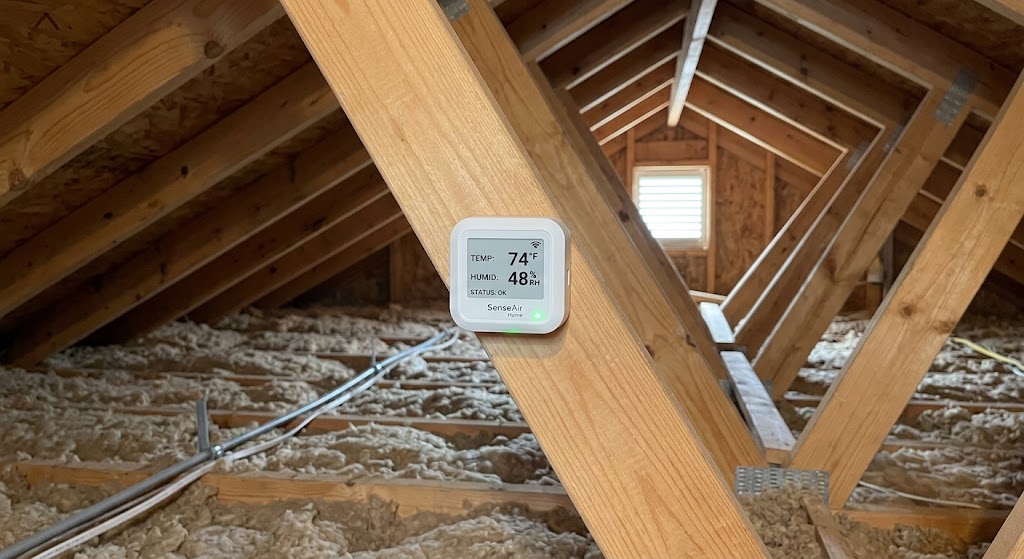
Quick answer
A smart humidity sensor can help prevent attic mold by revealing sustained moisture increases before visible damage appears, especially when readings rise after rain or during cooler weather. The sensor is an early-warning tool, not a mold detector: if humidity stays elevated or condensation, damp insulation, staining, or musty odors appear, the real fix is to identify and correct the moisture source such as a roof leak, indoor air leakage, improper exhaust venting, or attic ventilation problem.
Table of contents
- Why late summer is the right time to start monitoring
- A smart humidity sensor does not detect mold
- Do not use one humidity percentage as an attic mold alarm
- Use EPA’s guidance as a warning reference, not a diagnostic limit
- Why temperature belongs on the same dashboard as humidity
- Where to place the sensor in the attic
- When a second sensor is worth it
- What to look for before the first autumn rain
- Build alerts around persistence, not just a single spike
- Early-warning alert
- Persistent-condition alert
- Compare sensor history with rainfall
- The four moisture sources the sensor cannot fix
- 1. Roof leaks
- 2. Air leakage from the living space
- 3. Bathroom, kitchen, or dryer exhaust terminating in the attic
- 4. Ventilation problems
- Choosing a smart humidity sensor for attic monitoring
- Hub-based sensors
- Wi-Fi sensors
- Display-oriented sensors
- Test the monitoring system before relying on it
- What to do when the alert fires
- Step 1: Check the trend
- Step 2: Compare with weather and household activity
- Step 3: Inspect only if attic access is safe
- Step 4: Fix the moisture source
- Step 5: Use the sensor to verify recovery
- Know when not to enter the attic yourself
- A practical late-summer setup
- Conclusion
Key takeaways
- A smart humidity sensor is an early-warning device, not a mold detector or a substitute for fixing the moisture source.
- Attic readings are most useful as trends: watch for sustained elevation, repeated post-rain spikes, and temperature-humidity patterns rather than relying on one RH snapshot.
- If monitoring points to a real moisture problem, inspect for roof leaks, indoor air leakage, wet insulation, improper exhaust venting, and attic ventilation issues before adding more automation.
Editorial transparency
Who worked on this article and how it was handled.
- Written by
- Daniel Reed
- Creation method
- Editorial research
AI assistance: AI assisted with research organization and drafting. Sources, factual claims, and the final article should be reviewed by a human editor before publication.
Attic mold rarely starts as a dramatic black patch you can see from the access hatch. It usually starts as a moisture problem: damp roof sheathing, wet insulation, repeated condensation, or humid air that keeps reaching cold surfaces long enough for building materials to stay wet.
That makes a smart humidity sensor useful before autumn rain arrives—but only if you treat it as an early-warning instrument rather than a mold detector. A sensor can show that conditions are changing; it cannot tell you whether spores are present, whether wood is already wet, or which part of the roof assembly needs repair.
The most useful setup is therefore not “install a sensor and automate a fan.” It is a monitoring system that establishes a baseline, records temperature and relative humidity over time, flags unusual patterns, and tells you when the attic needs a real inspection for leaks, condensation, air leakage, or ventilation problems.
Why late summer is the right time to start monitoring
Waiting until the first week of persistent autumn rain makes attic data much less useful because you have no dry-weather baseline for comparison.
Late summer gives you a reference period. You can see what the attic normally does during warm, relatively stable weather and then compare that behavior with the first cooler nights, heavy rainfall, and changes in household heating or ventilation.
That comparison is more informative than a single humidity number.
For example, imagine an attic that usually ranges within a predictable band throughout the day. After the first long rain, humidity rises sharply and stays elevated long after outdoor conditions improve. That pattern is more actionable than simply seeing “65% RH” once on an app.
Similarly, if humidity rises every evening when showers, cooking, and laundry happen downstairs, the pattern may point toward air leakage or improper exhaust routing rather than a roof leak.
A smart humidity sensor does not detect mold
This distinction matters because smart-home marketing can make environmental sensors sound more capable than they are.
A typical smart humidity sensor measures some combination of:
- relative humidity;
- air temperature;
- atmospheric pressure;
- historical trends;
- threshold alerts.
Aqara’s Temperature and Humidity Sensor, for example, reports temperature and humidity in real time, stores historical data, and can send notifications for abnormal environmental conditions. Shelly H&T Gen3 provides Wi-Fi temperature and humidity monitoring with historical data, while SwitchBot Meter Pro adds configurable temperature and humidity alerts and can integrate with Matter through a compatible SwitchBot hub.
None of those features identifies mold species or confirms whether mold is growing on roof sheathing.
The sensor’s job is to answer a different question:
Are the attic’s moisture conditions changing in a way that deserves investigation?
That is a valuable question because moisture control is central to mold prevention. EPA guidance states that moisture control is the key to mold control and recommends drying wet materials quickly after leaks or spills.
Do not use one humidity percentage as an attic mold alarm
EPA recommends keeping indoor relative humidity below 60%, ideally between 30% and 50% when possible. That is useful guidance for conditioned indoor spaces.
An attic can be different.
A vented attic is intentionally connected to outdoor conditions, so its temperature and relative humidity can move considerably across a day. Relative humidity also changes as temperature changes, even when the actual amount of moisture in the air has not changed.
That means an attic reading above 60% does not automatically prove a mold problem, and a reading below 60% does not prove that the roof deck is dry.
Use EPA’s guidance as a warning reference, not a diagnostic limit
A reasonable monitoring strategy is to use higher-than-normal humidity as a prompt to investigate rather than a pass/fail mold threshold.
Pay particular attention to:
- humidity that stays elevated longer than the attic’s normal pattern;
- repeated jumps that correlate with rain;
- sharp evening increases that correlate with showers or cooking;
- high humidity combined with rapidly falling attic temperature;
- visible condensation;
- water staining on sheathing or rafters;
- damp or compressed insulation;
- a musty odor;
- frost or moisture marks in cold-weather climates.
The trend is the signal. The building inspection is the diagnosis.
Why temperature belongs on the same dashboard as humidity
Relative humidity without temperature can be misleading.
Warm air can contain more water vapor than cold air. When warm, humid air reaches a colder surface, the surface temperature can fall below the air’s dew point and condensation can form. EPA specifically identifies condensation as a sign that moisture conditions need attention.
That is why an attic monitor should ideally record both temperature and relative humidity.
You do not necessarily need to calculate dew point manually every day. The practical value is seeing whether humidity rises as the roof assembly cools, particularly overnight or during the transition into colder weather.
A dashboard that shows only the current RH hides that relationship. A historical graph showing temperature and humidity together is much more useful.
Where to place the sensor in the attic
The goal is to measure representative attic air, not the microclimate created by one unusual surface.
For a typical accessible attic, start with one sensor in a central area where it is:
- off the insulation;
- away from direct sunlight through vents or roof openings;
- not touching the roof deck;
- not immediately beside a soffit, ridge, or gable vent;
- away from a bathroom or dryer exhaust outlet if one improperly terminates nearby;
- accessible enough to test and replace batteries safely.
Mounting the device directly against hot roof sheathing or placing it beside a vent can bias the reading toward that local condition.
When a second sensor is worth it
A second sensor becomes useful when the attic has distinct zones.
Examples include:
- a long attic with several roof sections;
- a known historical leak area;
- a north-facing roof plane that stays cooler;
- an addition with different insulation or ventilation;
- a remote corner beyond a major obstruction;
- one zone above a bathroom or laundry room.
With two sensors, you can distinguish a localized problem from a whole-attic change.
If only the sensor near one roof penetration spikes after rain, that is a different clue from both sensors rising together across the attic.
What to look for before the first autumn rain
Once the sensor is installed, give yourself enough time to learn the attic’s normal behavior.
A useful baseline period should include several ordinary days rather than one afternoon snapshot.
Record or review:
- Daily minimum and maximum humidity. How wide is the normal swing?
- Daily temperature range. How quickly does the attic cool after sunset?
- Time of humidity peaks. Are they tied to outdoor weather or household activity?
- Difference between attic and indoor conditions. Does attic humidity climb when the house becomes more humid?
- Any recurring location-specific difference. If you have two sensors, does one consistently behave differently?
You do not need spreadsheet-level analysis. The goal is simply to know what “normal” looks like before wet weather changes the picture.
Build alerts around persistence, not just a single spike
A one-minute humidity excursion can create unnecessary notifications. Moisture problems are more useful to investigate when the reading is abnormal and stays abnormal relative to your baseline.
If your smart-home platform allows it, use two layers of alerts:
Early-warning alert
Trigger when humidity moves substantially outside its normal range or crosses the level you have chosen as an investigation threshold.
This alert tells you to open the history graph, not to assume there is mold.
Persistent-condition alert
Trigger only if the abnormal reading continues for a meaningful period.
This helps distinguish a short weather-driven change from a condition that deserves closer attention.
The exact numbers and duration should reflect your attic, climate, sensor accuracy, and baseline. Avoid copying a threshold from another home because a vented attic in a humid coastal climate will behave differently from an attic in a cold, dry continental climate.
Compare sensor history with rainfall
One of the most powerful uses of a connected humidity sensor is correlation.
If the attic repeatedly becomes wetter after rain, you have a useful maintenance clue.
Look for a pattern like this:
| Sensor pattern | What it may suggest | Next step |
|---|---|---|
| Sharp rise during or immediately after rain | Roof, flashing, vent, or penetration leak | Inspect safely for staining or damp materials; arrange roof evaluation if needed |
| Humidity rises after showers or laundry | Indoor moisture may be reaching attic | Check exhaust routing and air leakage paths |
| Humidity rises as attic temperature drops overnight | Condensation risk may be increasing | Check air sealing, insulation alignment, and ventilation strategy |
| One sensor rises but another stays stable | Localized moisture source | Inspect that zone first |
| Both sensors track outdoor changes and recover normally | May reflect normal vented-attic behavior | Continue monitoring and compare over time |
These are diagnostic clues, not definitive conclusions. A sensor cannot distinguish rainwater from condensation by itself.
The four moisture sources the sensor cannot fix
If the data says something is wrong, automation is no longer the main problem to solve.
1. Roof leaks
EPA advises homeowners not to ignore wet spots or water stains and to fix leaks promptly.
Autumn rain can expose failures around:
- flashing;
- roof penetrations;
- vents;
- valleys;
- damaged roofing materials;
- transitions between roof sections.
If humidity rises after storms and you find damp sheathing or insulation, the roof assembly needs attention. A smarter sensor will not make the leak safer.
2. Air leakage from the living space
Department of Energy Building Science guidance notes that air sealing between conditioned space and the attic helps prevent attic moisture problems.
Warm, moisture-laden indoor air can leak upward through:
- plumbing penetrations;
- wiring holes;
- attic hatches;
- dropped soffits;
- recessed fixtures;
- wall top plates;
- duct and chase openings.
As autumn nights become colder, that warm air can encounter colder roof surfaces and contribute to condensation.
3. Bathroom, kitchen, or dryer exhaust terminating in the attic
ENERGY STAR specifically flags kitchen, bathroom, or clothes-dryer vents that exhaust moist air directly into an attic as a condition that should be corrected before attic air-sealing work proceeds.
If a humidity graph jumps at the same time every evening, investigate whether household moisture sources are involved.
4. Ventilation problems
Little or no attic ventilation is another condition ENERGY STAR recommends having evaluated before proceeding with attic work.
Do not respond to a high humidity alert by randomly adding a powered attic fan. Attic ventilation design depends on whether the roof assembly is vented or unvented, climate, insulation strategy, and building code. An intervention that is appropriate for one attic can be wrong for another.
Choosing a smart humidity sensor for attic monitoring
You do not need a complicated environmental station. The best attic sensor is one that reliably collects the data you will actually review.
Prioritize these characteristics:
| Feature | Why it matters in an attic |
|---|---|
| Temperature + RH sensing | Lets you interpret humidity alongside cooling conditions |
| Historical graphs | Makes seasonal and post-rain patterns visible |
| Configurable alerts | Gives early warning without daily manual checks |
| Reliable radio range | Attic floors, insulation, and construction can weaken connectivity |
| Battery reporting | Reduces the chance of silent monitoring failure |
| Suitable operating range | Extreme attic temperatures can exceed normal room conditions |
| Export/integration options | Useful if you want Home Assistant or another long-term dashboard |
Hub-based sensors
Compact Zigbee or ecosystem sensors such as Aqara’s Temperature and Humidity Sensor can be attractive because the sensor itself is small and battery-powered. The trade-off is that a compatible hub is required.
Hub placement matters. If the attic is several floors away or shielded by dense construction, test connectivity before trusting the system for unattended monitoring.
Wi-Fi sensors
Devices such as Shelly H&T Gen3 connect directly to Wi-Fi and can provide historical data without a separate hub. That simplifies architecture but shifts the reliability question to Wi-Fi coverage and battery behavior.
Display-oriented sensors
A device such as SwitchBot Meter Pro provides local display and multiple alert methods. That can be useful near an attic access point, although the display itself is less important than remote history if the device sits deep inside the attic.
The correct choice depends less on brand than on whether the sensor remains connected in the actual attic and gives you enough history to recognize changes.
Test the monitoring system before relying on it
Installing the sensor is only half the job.
Before the weather changes:
- Confirm the device remains online for several days.
- Check that temperature and humidity history is actually being stored.
- Create a temporary alert and verify that your phone receives it.
- Make sure low-battery warnings are enabled.
- Compare two sensors side by side for a short period if you plan to use multiple units.
- Move them to their final locations only after confirming they behave consistently.
Consumer sensors can differ by a few percentage points, so the objective is not laboratory precision. Consistent trend tracking is more important for this use case.
What to do when the alert fires
A smart alert should lead to a repeatable inspection workflow.
Step 1: Check the trend
Look at several hours or days of history. Did the reading jump suddenly, drift upward slowly, or follow a normal daily cycle?
Step 2: Compare with weather and household activity
Was there heavy rain? A rapid outdoor temperature drop? Long showers? Laundry? A humidifier running downstairs?
Step 3: Inspect only if attic access is safe
Look for:
- wet or matted insulation;
- water staining;
- damp roof sheathing;
- visible condensation;
- darkened or deteriorating wood;
- disconnected or misrouted exhaust ducts.
Step 4: Fix the moisture source
Do not treat the sensor alert itself as the problem. The priority is the roof leak, air leakage, exhaust issue, or building-envelope defect producing the moisture.
Step 5: Use the sensor to verify recovery
After repairs, keep monitoring. A good outcome is not simply “the alarm stopped.” You want the attic to return to its normal weather-driven pattern after rain and temperature changes.
Know when not to enter the attic yourself
Attics combine several hazards: limited footing, heat, electrical wiring, low clearances, dust, insulation, and potentially damaged building materials.
ENERGY STAR recommends professional help before attic projects when there is difficult access, wet or damp insulation, moldy or rotted framing, improper exhaust venting, little or no attic ventilation, or old knob-and-tube wiring.
There is another important warning: some older attics contain vermiculite insulation, which may contain asbestos. ENERGY STAR advises not disturbing vermiculite unless it has been appropriately tested.
If you see extensive visible mold, structural deterioration, active leaking near electrical equipment, or anything you cannot inspect safely, stay out and use a qualified roofing, building-envelope, HVAC, or mold-remediation professional as appropriate.
A practical late-summer setup
For most homeowners, the useful configuration is simple:
- One smart temperature/humidity sensor in a representative attic location.
- A second sensor only if the attic is large or has a known problem zone.
- Historical logging enabled from day one.
- One investigation alert for sustained abnormal humidity relative to your baseline.
- Rainfall comparison after the first autumn storms.
- A physical inspection plan for any repeatable anomaly.
Do not add a dehumidifier, powered fan, or other automated equipment to an attic solely because a sensor reading looks high. First determine whether the attic assembly is designed to be vented or unvented and identify why moisture is accumulating.
That keeps the smart-home layer in its proper role: detection, history, and notification.
Conclusion
A smart humidity sensor can give you something attic mold rarely does: an early warning. Install it before autumn rain, establish a late-summer baseline, and pay attention to sustained changes, post-rain spikes, and humidity patterns that appear as the attic cools.
But do not mistake monitoring for remediation. If the data points to a real moisture problem, the next step is to find the source—roof leakage, indoor air leakage, improper exhaust venting, condensation, or a ventilation issue—and correct it safely. Use the sensor afterward to confirm that the attic returns to its normal pattern instead of waiting for visible mold to tell you the problem is still there.
Common questions
Questions this guide answers
What humidity level should trigger concern in an attic?
EPA guidance for occupied indoor spaces recommends keeping relative humidity below 60%, ideally between 30% and 50%. An unconditioned attic is different, so do not treat one RH number as a mold diagnosis. Use the reading as a trend signal and investigate sustained high humidity, repeated spikes after rain, condensation, damp materials, staining, or other evidence of moisture.
Can a humidity sensor detect attic mold?
No. A humidity sensor measures environmental conditions such as temperature and relative humidity; it does not identify mold. Its value is early warning: unusual moisture patterns can tell you when to inspect for leaks, condensation, wet insulation, or ventilation problems before damage becomes obvious.
Where should I place a smart humidity sensor in an attic?
Place it where it measures representative attic air rather than direct sun, a vent opening, insulation, or the roof deck itself. In a larger or complex attic, a second sensor near a known problem zone can help distinguish a localized moisture issue from a whole-attic humidity change.
Why does attic humidity rise when autumn weather arrives?
Cooler roof surfaces can increase condensation risk when warm moisture-laden air reaches the attic, while seasonal rain can expose roof or flashing leaks. Air leakage from the living space and bathroom, kitchen, or dryer exhaust that terminates in the attic can also add moisture.
What should I do if the attic humidity rises after rain?
Compare the timing with rainfall, inspect safely for wet insulation, staining, roof penetrations, and damp sheathing, and arrange professional evaluation if the source is not obvious. A repeatable humidity rise after rain is more actionable than a single isolated sensor reading.
Evidence & further reading
Sources & references
Primary and authoritative references used to support or contextualize this article. Links open the original source.
- 1A Brief Guide to Mold, Moisture and Your Home
U.S. Environmental Protection Agency · Accessed Aug 26, 2026
Supports moisture control as the key to mold control, prompt drying after leaks, and EPA indoor relative-humidity guidance.
- 2Mold Course Chapter 2
U.S. Environmental Protection Agency · Accessed Aug 26, 2026
Supports the relationship between humidity, condensation, cold surfaces, and mold risk.
- 3Attic Air Sealing Project
ENERGY STAR · Accessed Aug 26, 2026
Supports professional evaluation when an attic has wet insulation, moldy or rotted framing, improper exhaust termination, inadequate ventilation, or difficult access.
- 4Air Sealing Existing Attics
Building Science Education, U.S. Department of Energy · Accessed Aug 26, 2026
Supports air sealing between conditioned space and the attic as a method of reducing attic moisture problems.
- 5Temperature and Humidity Sensor
Aqara · Accessed Aug 26, 2026
Supports real-time temperature and humidity monitoring, historical data, abnormal-condition notifications, and stated sensor accuracy.
- 6Shelly H&T Gen3 Matte White
Shelly · Accessed Aug 26, 2026
Supports Wi-Fi temperature and humidity monitoring and historical data as an example of a hub-free smart monitoring approach.
- 7SwitchBot Meter Pro
SwitchBot · Accessed Aug 26, 2026
Supports temperature and humidity monitoring, configurable alerts, and Matter integration through a compatible SwitchBot hub.

About the author
Daniel Reed
Daniel writes about connected-home standards, small-space technology, device interoperability, and privacy-conscious urban living.
More from Daniel →Make your home smarter without buying every gadget.
One useful idea, one product worth knowing, and one energy-saving action—delivered weekly.
No spam. Unsubscribe anytime.
Semantic recommendations
Related reading
Selected from topic cluster, entities, tags, search intent, and editorial relationships.
How to Automate Ceiling Fans for Reverse Rotation in Upcoming Fall
Set ceiling fans for fall without climbing a ladder: learn which smart fans can reverse from an app, what can be automated, and the safest seasonal setup.

Smart Thermostat Geofencing for Back-to-School Family Schedules
Use smart thermostat geofencing without leaving kids, parents, or caregivers uncomfortable when back-to-school schedules change from day to day.
Smart Air Purifiers for Late-Summer Ragweed & Pollen Season
Choose and automate a smart air purifier for late-summer ragweed and pollen using the right CADR, room size, schedules, and filtration strategy.
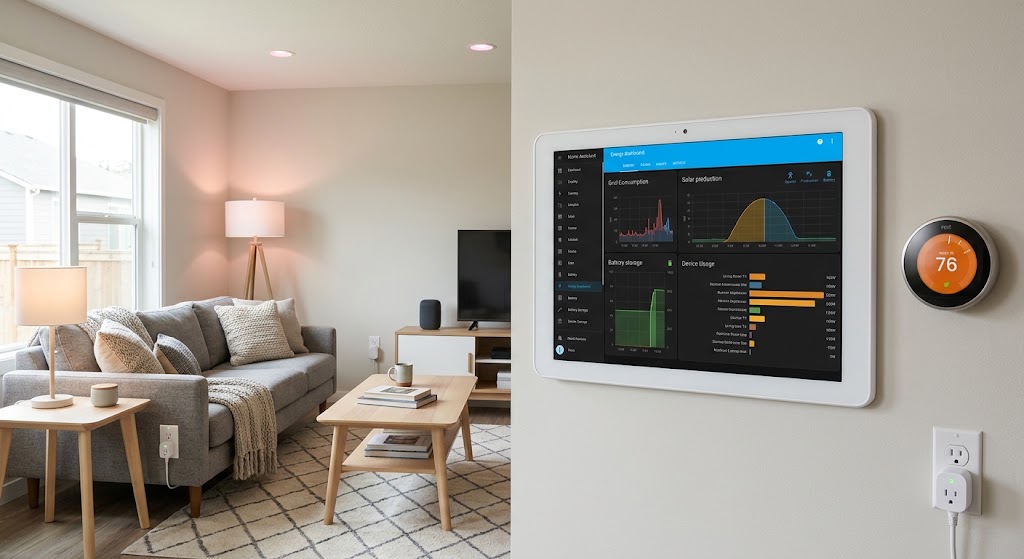
5 Essential Home Assistant Automations for Energy Saving
These five Home Assistant automations target the biggest sources of avoidable household energy use: HVAC runtime, unnecessary lighting, standby loads, expensive tariff windows, and solar heat gain.