The EU Cyber Resilience Act: A Smart-Home Buyer’s Guide
The EU’s Cyber Resilience Act is changing cybersecurity expectations for connected products. Here is what smart-home buyers should check as its rules take effect.

Quick answer
The EU Cyber Resilience Act (CRA) sets cybersecurity and vulnerability-handling requirements for products with digital elements sold on the EU market. For smart-home buyers, its most practical signal will be clearer information about a product’s security-support period—but the law is not a guarantee that a device can never be hacked.
Table of contents
- What the Cyber Resilience Act covers
- The dates buyers should know
- What should a smart-home buyer look for?
- 1. A specific security-support end date
- 2. A believable update and vulnerability process
- 3. Clear identity, setup, and recovery information
- 4. Treat CE marking as compliance information, not a security score
- What about devices already in homes?
- A short pre-purchase checklist
- Frequently asked questions
- Does the CRA apply to smart-home products sold in the United States?
- Does a CE mark prove that a product is impossible to hack?
- Do I need to replace older smart-home devices before December 2027?
- Conclusion
Key takeaways
- The CRA places its principal cybersecurity and vulnerability-handling duties on manufacturers and other economic operators, not on individual smart-home owners.
- The reporting phase began on 11 September 2026; most product cybersecurity requirements apply from 11 December 2027.
- Buyers should compare security-support end dates, update practices, account requirements, and local-control options rather than treating a CE mark as a security score.
Editorial transparency
Who worked on this article and how it was handled.
- Written by
- Daniel Reed
- Creation method
- Editorial research
AI assistance: AI assisted with research organization and drafting. The cited statements were checked against the original European Commission and EUR-Lex materials before publication.
A smart lock, camera, thermostat, or connected hub can remain in a home for years—often longer than the manufacturer’s app or cloud service. That makes security support a buying decision, not just a technical detail.
The EU Cyber Resilience Act (CRA) is intended to raise the baseline for connected products.[1] It is easy to overread what a regulation or a CE mark promises: the Act is not a consumer-facing “unhackable” label, and its obligations fall mainly on manufacturers and other businesses in the supply chain.[1][3]
Here is what the law changes, what its dates mean in 2026 and 2027, and the practical questions to ask before adding another internet-connected device to your home.
What the Cyber Resilience Act covers
The CRA is an EU regulation for products with digital elements made available on the EU market.[3] In broad terms, that includes hardware and software whose intended purpose or reasonably foreseeable use involves a direct or indirect connection to another device or network.[3] A connected light, smart plug, camera, lock, thermostat, or hub can therefore fall within the kind of product category the Act addresses, although the precise scope depends on the product and any applicable sector-specific rules.[3]
The regulation is not limited to devices manufactured in the EU.[3] Its market focus matters: it applies to products made available on the Union market, so a brand’s location alone does not determine whether the rules are relevant.[3]
The Commission identifies consumer products with digital elements such as smart door locks, baby-monitoring systems, and alarm systems as examples that can present higher cybersecurity risk.[4] That does not mean every smart-home product is automatically placed in the same risk class or goes through an identical assessment.[4] The Act uses product categories and conformity-assessment routes; its stricter procedures apply to specified important or critical products.[4]
The dates buyers should know
The CRA entered into force on 10 December 2024, but its duties do not all start on one date.[1] As of November 2026, the first consumer-relevant milestone is already in effect: manufacturers’ reporting obligations for actively exploited vulnerabilities and severe incidents began on 11 September 2026.[1][2][3] Most product cybersecurity obligations apply from 11 December 2027.[1][2][3]
| Date | What changes | What it means for buyers |
|---|---|---|
| 10 December 2024 | The CRA entered into force. | The law exists, but most product obligations are phased in later. |
| 11 September 2026 | Article 14 reporting obligations begin for actively exploited vulnerabilities and severe incidents affecting products with digital elements. | This is a manufacturer reporting duty, not a new reporting task for device owners. |
| 11 December 2027 | The Act’s main product requirements apply. | Buyers should expect clearer security-support information and lifecycle duties as products are placed on the EU market under the applicable rules. |
The dates come from the Commission’s implementation timeline and the regulation itself.[1][2][4] The reporting duty concerns manufacturers’ notifications to the relevant CSIRT and ENISA; it is not a warranty that every vulnerability will be prevented or fixed immediately.[3][4]
What should a smart-home buyer look for?
1. A specific security-support end date
The CRA requires manufacturers to determine a support period for products with digital elements.[3] The end date—month and year—must be made available to users in a clear and understandable way at the time of purchase under the Act’s information requirements.[3] This gives buyers a more useful question than “Is it secure?”: Until when does the manufacturer intend to handle vulnerabilities for this exact device?[3]
A support end date is not a prediction that the product will stop working on that day.[3] It is a boundary for the manufacturer’s security-support commitment.[3] A device may continue to perform basic functions afterward, but its exposure can change if vulnerabilities are no longer handled.[3] Check whether the date is listed for the precise model and hardware revision, not only for a product family or app.
2. A believable update and vulnerability process
Look for a vendor security page, a way to report vulnerabilities, release notes, and a clear explanation of how security updates reach the device.[1][3] The CRA requires vulnerability handling across the product lifecycle, but the law cannot make every vendor’s process equally transparent or every update frictionless.[1][3]
For a device that depends on cloud services, ask what happens if the vendor retires an account platform or stops maintaining the service. For a local hub or controller, find out whether essential controls remain available on the home network if the internet connection is down. Local control is not a substitute for security updates, and cloud connectivity is not proof of weak security; they are separate trade-offs. Our guides to local control versus cloud-connected smart homes and isolating IoT devices on a home network explain those decisions in more detail.
3. Clear identity, setup, and recovery information
The Act’s user-information requirements are intended to help people install, operate, and use products securely.[3] Before buying, check whether the manufacturer explains account recovery, multi-factor authentication where available, reset procedures, and how to receive security notices.[3] These are sensible buyer checks, not a guarantee that every interface or feature is mandated in exactly the same way by the CRA.[3]
A practical setup should also avoid sharing one administrator password across the household. Keep the router and device firmware updated, remove old accounts when ownership changes, and retire devices whose cloud service has ended if they can no longer receive security fixes or function safely in your network.
4. Treat CE marking as compliance information, not a security score
The Commission says products will bear CE marking to indicate compliance with applicable CRA requirements, with enforcement by national market-surveillance authorities.[1] CE is not a star rating, a third-party product review, or a promise that a device has no vulnerabilities.[1] It also does not tell you whether the product’s support period is long enough for your needs.[1][3]
Use it alongside the product’s support end date and the manufacturer’s update information. If the listing does not make those details easy to find, ask the seller or manufacturer before purchase—especially for devices that control entry, monitor children, or protect a property.
What about devices already in homes?
The transition is not a simple “old devices are exempt” rule.[3] The Commission’s summary says the main CRA provisions generally apply to products placed on the market before 11 December 2027 only if, after that date, they undergo a substantial modification.[3] Separately, the vulnerability and incident reporting obligations apply to products with digital elements already made available on the EU market, including products placed there before the main application date.[3]
For an owner, that means the Act should not be treated as an automatic recall or a reason to replace a working device today. The more useful steps are to check the manufacturer’s announced support window, install available security updates, and review whether the product still receives maintenance. If a vendor ends support, consider isolating the device or replacing it based on its role and the risk of keeping it connected.
The CRA is also not a substitute for household security practices. A well-supported device can still be exposed by a reused password, an outdated router, or an account with unnecessary access. Conversely, a device’s lack of a new CRA label today does not by itself prove that it is unsafe; timing and product scope matter.
A short pre-purchase checklist
Before you buy a connected home device, check:
- Support end date: Is there a specific month and year for the exact model?
- Update route: Can the manufacturer explain how security updates are delivered and how long they are expected?
- Service dependence: Which functions rely on an internet connection, app account, or paid subscription?
- Account security: Does the setup support sensible account protection and recovery?
- Replacement and resale: Can you remove your account and securely reset the device if you move or sell it?
- Risk if unsupported: Would an unpatched device affect physical access, privacy, safety, or other devices on your network?
These questions are useful now, even as the CRA’s main product obligations phase in through 2027. They help compare the long-term ownership cost of devices that otherwise look similar on a feature list.
Frequently asked questions
Does the CRA apply to smart-home products sold in the United States?
The CRA is an EU regulation for products made available on the EU market; it is not a general U.S. consumer law.[3] A product sold in multiple regions may be subject to different requirements in each market.[3]
Does a CE mark prove that a product is impossible to hack?
No. CE marking indicates conformity with applicable EU requirements, not zero risk or a consumer security score.[1] Continue to check support commitments, update history, and account controls.[1][3]
Do I need to replace older smart-home devices before December 2027?
The CRA does not create a blanket replacement deadline for consumers.[3] The transition rules distinguish products already placed on the market from products covered by the main requirements after the application date; reporting duties also have their own earlier start date.[3] Check the device’s current support status and follow manufacturer security guidance.[3]
Conclusion
The Cyber Resilience Act gives smart-home buyers a stronger reason to ask how long a connected product will receive security support and how its manufacturer handles vulnerabilities.[1][3] In November 2026, the reporting phase is already active; most product requirements begin on 11 December 2027.[1][2]
For a purchase today, start with the support end date, update process, and dependence on cloud services. Treat CE marking as a compliance signal—not a guarantee—and choose devices whose security support is likely to last as long as you expect to use them.
Common questions
Questions this guide answers
When do the Cyber Resilience Act rules apply to smart-home devices?
The CRA’s reporting obligations for actively exploited vulnerabilities and severe incidents began applying on 11 September 2026. Most of the Act’s product cybersecurity obligations apply from 11 December 2027.
Does the Cyber Resilience Act apply to smart locks and cameras?
The CRA covers products with digital elements made available on the EU market when their intended or reasonably foreseeable use involves a direct or indirect connection to a device or network. The regulation specifically identifies smart door locks, baby monitors, and alarm systems as examples of consumer products with digital elements that can carry higher cybersecurity risk.
Does CE marking mean a smart-home device cannot be hacked?
No. CE marking indicates that a product meets applicable EU requirements; it is not a promise of zero vulnerabilities, a security rating, or a substitute for checking the manufacturer’s support and update policies.
Evidence & further reading
Sources & references
Primary and authoritative references used to support or contextualize this article. Links open the original source.
- 1Cyber Resilience Act
European Commission · Accessed Nov 12, 2026
Purpose of the Act, manufacturer obligations, CE marking, and application dates.
- 2Cyber Resilience Act – Implementation
European Commission · Accessed Nov 12, 2026
Implementation timeline and current reporting/application milestones.
- 3The Cyber Resilience Act – Summary of the legislative text
European Commission · Accessed Nov 12, 2026
Product scope, manufacturer duties, support-period information, reporting rules, and transition for products already on the market.
- 4Regulation (EU) 2024/2847 (Cyber Resilience Act)
European Parliament and Council of the European Union · Accessed Nov 12, 2026
Binding regulation, including the scope and examples of higher-risk consumer smart-home products.

About the author
Daniel Reed
Daniel writes about connected-home standards, small-space technology, device interoperability, and privacy-conscious urban living.
More from Daniel →Make your home smarter without buying every gadget.
One useful idea, one product worth knowing, and one energy-saving action—delivered weekly.
No spam. Unsubscribe anytime.
Semantic recommendations
Related reading
Selected from topic cluster, entities, tags, search intent, and editorial relationships.
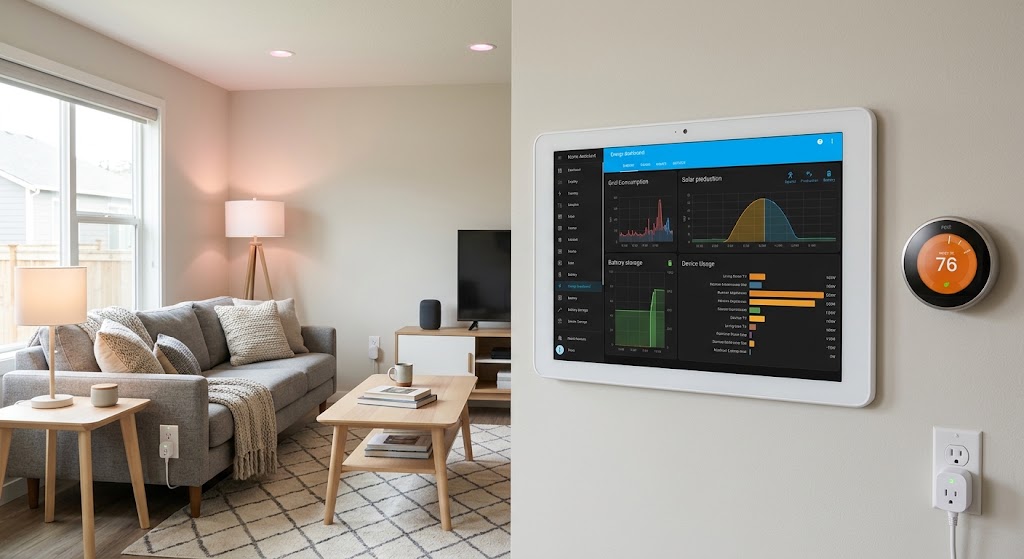
5 Essential Home Assistant Automations for Energy Saving
These five Home Assistant automations target the biggest sources of avoidable household energy use: HVAC runtime, unnecessary lighting, standby loads, expensive tariff windows, and solar heat gain.

How to Set Up Perimeter Lighting That Triggers During Security Alerts
Turn outdoor lights into a coordinated security response. This guide shows how to connect alarm states, door sensors, motion events, cameras, and Home Assistant so perimeter lighting activates only when it should.
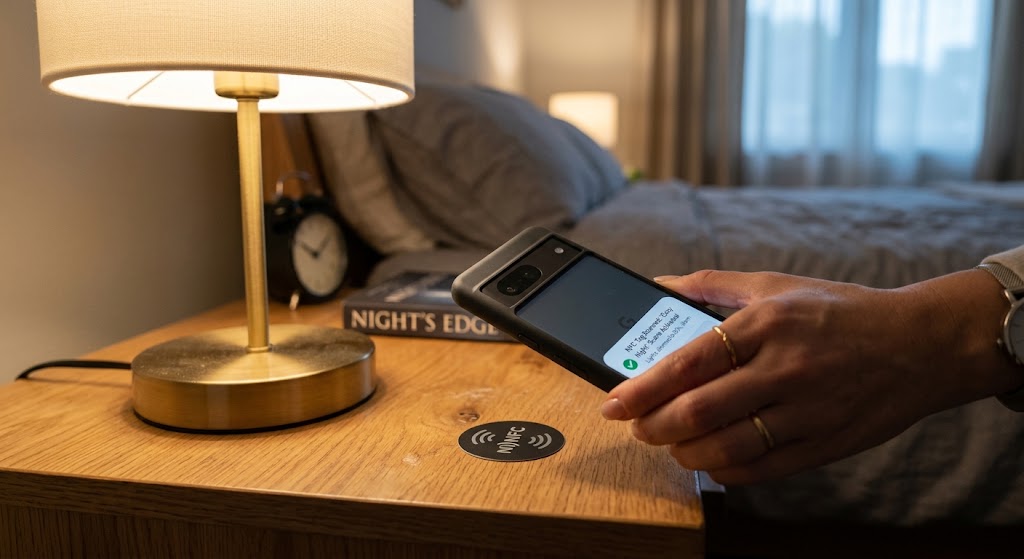
How to Set Up NFC Tags Around the House for One-Touch Lighting
Use inexpensive NFC tags as intentional one-touch lighting controls for bedside scenes, entryways, desks, and whole-home off routines without adding wall switches.

Smart Motion Sensor Automations for Dark Apartment Hallways
Build hallway lighting that turns on only when needed, stays dim at night, and avoids the annoying false-offs common with basic motion automations.