
Window AC Energy Hacks: Saving Money in Peak August Temperatures
Lower your August cooling bill with practical window AC fixes, smarter settings, and airflow tricks that reduce waste without sacrificing comfort.
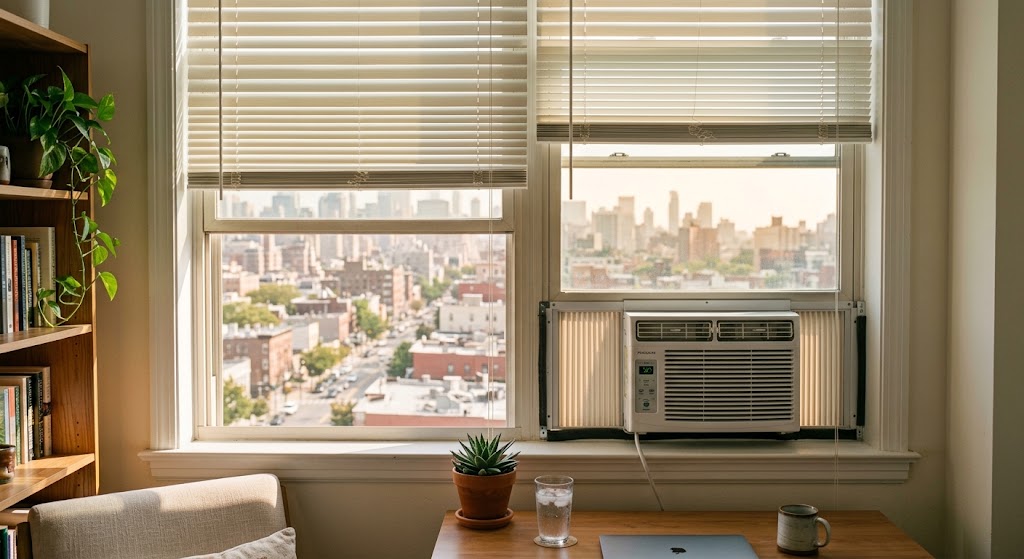
Quick answer
The most effective window AC energy hacks are usually simple: seal installation gaps, set the thermostat as high as is comfortable, keep the filter clean, reduce solar heat through windows, and use fan and scheduling features strategically. In peak August temperatures, those changes can lower wasted runtime, improve comfort, and cut your cooling bill without replacing the unit immediately.
Table of contents
- Start with the installation, not the thermostat
- Why this matters in August
- Set the thermostat for comfort, not for maximum blast
- The August mistake to avoid
- Use fan speed strategically when humidity is high
- Add a separate room fan before lowering the setpoint
- Reduce solar heat before it reaches the room
- Shade the room, not just the unit
- Clean the filter monthly during heavy-use season
- Also keep the airflow path clear
- Stop heating up the thermostat sensor
- Good practical fixes
- Use smart features only when they prevent wasted runtime
- Three smart routines that actually help
- Know when the unit itself is the problem
- A realistic August action plan
- When to call a professional or stop DIY troubleshooting
- Conclusion
Key takeaways
- A poorly sealed window AC can waste cool air and force the unit to run longer than necessary.
- Setting the thermostat colder than you need rarely cools the room better; it usually just increases runtime and cost.
- Filter maintenance, shading, and sensible fan use are some of the fastest low-cost ways to improve room AC efficiency.
Editorial transparency
Who worked on this article and how it was handled.
- Written by
- Daniel Reed
- Creation method
- Editorial research
AI assistance: AI assisted with research organization and drafting. Sources, factual claims, and the final article should be reviewed by a human editor before publication.
Peak August heat exposes every weakness in a window AC setup. If the room still feels sticky by late afternoon, the unit runs nonstop, and the electric bill spikes, the problem is often not just the weather.
Many people respond by setting the thermostat lower and hoping for a faster cooldown. That usually misses the real sources of waste: air leaks around the unit, blocked airflow, direct solar heat, and settings that make the AC run harder than necessary.
This guide focuses on the highest-value window AC energy hacks for late-summer conditions. The goal is simple: keep the room comfortable, cut wasted runtime, and know when small adjustments are enough versus when the unit itself is the problem.
Start with the installation, not the thermostat
The fastest way to waste money with a window air conditioner is to let outdoor air leak around it.
ENERGY STAR says an improperly installed room air conditioner can leak as much air as a 6-square-inch hole. That is a useful reminder that efficiency begins with installation quality, not just with the temperature setting.
Check these basics first:
- Make sure the side panels and any included insulation materials are installed correctly.
- Seal obvious gaps where hot outdoor air can enter around the frame.
- Confirm the unit fits tightly in the window and is supported as the manufacturer intended.
- Keep the unit level so drainage works properly.
If your AC is rattling, tilting oddly, or leaving clear open gaps, no “energy-saving mode” will make up for that.
Why this matters in August
During peak afternoon heat, every air leak increases the cooling load. Your AC is no longer just cooling the room; it is also fighting a constant stream of hot outdoor air.
That means a resealing job can improve comfort even before it shows up on the utility bill. If the room feels less drafty and the unit cycles off more often instead of running continuously, that is usually a good sign.
Set the thermostat for comfort, not for maximum blast
One of the oldest myths in home cooling is that setting a window AC much colder will cool the room faster. In practice, a room air conditioner keeps running until it reaches the target temperature. Setting the target unnecessarily low often just increases runtime.
ENERGY STAR recommends setting the thermostat as high as is comfortable, typically 78°F. That will not be right for every person or room, especially in very humid apartments or top-floor spaces, but it is a solid benchmark.
A practical rule is this:
| Situation | Better approach |
|---|---|
| You are home and need steady comfort | Start around 78°F and adjust slightly based on humidity and comfort |
| You are leaving for several hours | Raise the setting rather than cooling an empty room |
| You return at the hottest time of day | Cool the room before it becomes uncomfortable if your unit supports scheduling |
| The room feels clammy more than hot | Adjust airflow and humidity strategy before just lowering the setpoint |
The August mistake to avoid
If you routinely set the unit to 68°F or lower because the room feels muggy, the issue may be humidity, solar heat, or air leaks rather than a need for a drastically colder setpoint.
That is why the next two hacks matter just as much as the temperature itself.
Use fan speed strategically when humidity is high
Late-summer heat is often a humidity problem as much as a temperature problem.
ENERGY STAR specifically recommends using low fan speed on humid days, because slower airflow helps remove more moisture. That can make a room feel more comfortable even when the thermostat setting stays the same.
If your unit has multiple modes, think about them this way:
- Cool + low fan: often best when the air feels damp or sticky.
- Cool + higher fan: can help with faster air movement, but may remove less moisture.
- Fan only: useful for circulation, but it does not lower room temperature.
- Eco or Energy Saver: worth using if your unit supports it well, but watch comfort and cycling behavior.
Add a separate room fan before lowering the setpoint
ENERGY STAR also recommends using an extra fan to spread cooled air around. That can help a window AC cool a room more evenly, especially if furniture or room shape blocks airflow.
The smart move is often to pair a moderate AC setpoint with better air circulation instead of forcing the unit to do all the work alone.
Reduce solar heat before it reaches the room
A window AC has a much easier job if the room is not gaining as much heat in the first place.
The Department of Energy says heat gain and heat loss through windows are responsible for roughly 25% to 30% of residential heating and cooling energy use. In late August, west-facing windows can be especially punishing because they load rooms with heat exactly when the outdoor temperature is already near its daily peak.
Simple ways to cut that load include:
- closing blinds or curtains during the hottest part of the day;
- using reflective or blackout curtains on the sunniest windows;
- keeping direct sunlight off the room before the space overheats;
- limiting heat-producing activities such as oven use during the hottest hours.
Shade the room, not just the unit
Some people focus only on keeping sun off the AC itself. That can help in some situations, but the bigger win is usually reducing how much solar heat enters the room.
If your unit is cooling a small bedroom or studio, blocking afternoon sun can be one of the cheapest ways to make the AC cycle less often.
Clean the filter monthly during heavy-use season
This is one of the least glamorous but highest-return window AC habits.
ENERGY STAR recommends checking your filter every month during heavy-use periods. A dirty filter slows airflow, makes the unit work harder, and can reduce comfort even when the compressor is running normally.
A clogged filter can lead to problems that feel like a bigger equipment failure:
- weak airflow;
- longer runtime;
- colder air near the unit but poor cooling across the room;
- higher noise levels;
- more dust buildup inside the system.
If the filter looks dirty after a month, clean or replace it according to the manufacturer’s instructions. Do not wait for a fixed calendar interval if the room is dusty, the AC runs daily, or outdoor air quality has been poor.
Also keep the airflow path clear
A clean filter matters most when air can actually move through the room. Keep curtains, bedding, furniture, and decorative covers from blocking the front intake or the cooled-air discharge.
It is also worth checking that the outdoor side is not obstructed by debris or anything that traps exhaust heat.
Stop heating up the thermostat sensor
ENERGY STAR advises against placing lamps or TVs near the AC thermostat, because extra heat can cause the unit to run longer.
This matters most for compact rooms where the unit’s sensor is already reacting to a small zone near the window. If a hot lamp, TV, gaming setup, or direct sun is warming that area, the AC may behave as if the whole room is hotter than it really is.
That does not mean you need a major furniture redesign. It just means you should avoid creating a hot pocket right next to the sensing area.
Good practical fixes
- Move lamps or heat-generating electronics away from the unit if possible.
- Keep direct late-day sun from striking the front area of the AC.
- Avoid stacking objects near the controls or air intake.
This is a small adjustment, but it often pairs well with the more important fixes above.
Use smart features only when they prevent wasted runtime
If your room AC has connected functionality, the best energy benefit usually comes from avoiding unnecessary runtime, not from gimmicky app control.
ENERGY STAR notes that connected room air conditioners can provide energy savings by allowing you to:
- turn the unit off remotely;
- schedule changes based on your needs;
- receive feedback on energy use.
Those features are most useful when your real schedule changes often.
Three smart routines that actually help
- Raise the temperature or turn the unit off when the room is empty. Cooling an empty room all afternoon is one of the easiest forms of waste to eliminate.
- Pre-cool selectively. If you know you will be home at 6 p.m., starting the unit slightly before the hottest period can be more comfortable than waiting for the room to become unbearable.
- Use repeatable weekday patterns. Consistent scheduling is usually more efficient than constant manual overrides.
What usually does not help is treating app control as a reason to run the unit more often just because it is convenient.
Know when the unit itself is the problem
Sometimes the right energy hack is to stop optimizing a unit that has become too inefficient, too small, or too unreliable.
ENERGY STAR says certified room air conditioners use about 10% less energy than standard models, and some variable-speed models can save even more. That does not automatically mean you should replace a functioning unit, but it does mean there is a point where an aging window AC becomes expensive to keep.
Consider replacement if your current unit is:
- struggling to maintain temperature even after you fix installation and airflow issues;
- unusually loud or vibrating heavily;
- cycling poorly or running almost nonstop in moderate conditions;
- missing features that would materially reduce waste, such as better efficiency or connected scheduling.
If you do shop for a replacement, focus on a model correctly sized for the room, with clear installation insulation materials, and with efficiency credentials you can verify.
A realistic August action plan
If you want the highest return with the least effort, do the fixes in this order:
| Priority | Action | Why it matters |
|---|---|---|
| 1 | Seal gaps and verify installation | Prevents expensive cool-air leakage |
| 2 | Clean or replace the filter | Restores airflow and reduces strain |
| 3 | Close blinds or curtains during peak sun | Cuts the cooling load before it reaches the room |
| 4 | Set the thermostat only as low as needed | Avoids unnecessary runtime |
| 5 | Use low fan on humid days and add a room fan | Improves comfort without overcooling |
| 6 | Use schedules or remote shutoff if available | Prevents cooling empty rooms |
| 7 | Reassess whether the unit is still worth keeping | Helps avoid sinking money into an inefficient AC |
Most people do not need seven separate upgrades. They need two or three corrections that remove the biggest waste.
When to call a professional or stop DIY troubleshooting
Window AC optimization is usually straightforward, but there are clear limits.
Stop and consult the manufacturer documentation or a qualified technician if the unit:
- repeatedly trips a breaker;
- leaks water indoors;
- makes burning smells or abnormal electrical noises;
- shows icing or obvious performance problems that basic maintenance does not fix.
You should also avoid ad hoc electrical work, improvised mounting, or modifications that fall outside the installation instructions. A cheaper bill is not worth a safety risk.
Conclusion
The best window AC energy hacks for peak August temperatures are not mysterious. Seal the installation properly, keep the filter clean, reduce solar heat, use the thermostat and fan strategically, and take advantage of scheduling if your unit supports it.
If those basics are in place, your room should feel more comfortable and the unit should run more rationally instead of fighting the heat nonstop. Start with the low-cost fixes today, then decide whether an older unit still deserves another summer or whether it is time for a more efficient replacement.
Common questions
Questions this guide answers
What is the best temperature to set a window AC in hot weather?
ENERGY STAR recommends setting the thermostat as high as is comfortable, typically around 78°F. The right number still depends on humidity, room size, and personal comfort, but setting the unit colder than necessary usually increases energy use.
Does a dirty filter make a window AC use more electricity?
Yes. ENERGY STAR advises checking the filter every month during heavy-use periods. A dirty filter restricts airflow, makes the system work harder, and can reduce both efficiency and comfort.
Should I use low or high fan speed on a window AC during August humidity?
On humid days, ENERGY STAR recommends low fan speed because slower airflow helps remove more moisture. A separate room fan can still help circulate the cooled air.
Do blinds and curtains really help a window AC work less?
Yes. The Department of Energy says heat gain and heat loss through windows account for about 25% to 30% of residential heating and cooling energy use, so reducing sun exposure can lower the cooling load on a room AC.
When should I replace an old window AC instead of just optimizing it?
If the unit is aging, cooling poorly, unusually loud, or expensive to run, a newer ENERGY STAR certified room air conditioner can be worth considering. ENERGY STAR says certified room ACs use about 10% less energy than standard models, and some variable- speed or connected models can save more.
Evidence & further reading
Sources & references
Primary and authoritative references used to support or contextualize this article. Links open the original source.
- 1Room Air Conditioners
ENERGY STAR · Accessed Aug 20, 2026
Supports room AC savings tips, installation sealing, level placement, 78°F guidance, low fan speed on humid days, and extra-fan advice.
- 2Keep Your Cool AND Save Your Money this Summer
ENERGY STAR · Accessed Aug 20, 2026
Supports monthly filter checks, room AC efficiency, and the value of connected features and scheduling.
- 3Heat & Cool Efficiently
ENERGY STAR · Accessed Aug 20, 2026
Supports filter maintenance and general cooling-efficiency guidance.
- 4Home Upgrades
U.S. Department of Energy · Accessed Aug 20, 2026
Supports the importance of reducing air leaks and improving window performance to lower cooling energy use.
- 5Why Energy Efficiency Matters
U.S. Department of Energy · Accessed Aug 20, 2026
Supports the estimate that windows account for roughly 20% to 30% of residential heating and cooling energy use.

About the author
Daniel Reed
Daniel writes about connected-home standards, small-space technology, device interoperability, and privacy-conscious urban living.
More from Daniel →Make your home smarter without buying every gadget.
One useful idea, one product worth knowing, and one energy-saving action—delivered weekly.
No spam. Unsubscribe anytime.
Semantic recommendations
Related reading
Selected from topic cluster, entities, tags, search intent, and editorial relationships.
Is Solar Attic Fan Installation Worth It for Summer Cooling?
Solar attic fans can lower attic temperatures, but the cooling-bill payoff is often smaller than expected. Here is when they help, when they can backfire, and what to fix first.

How Much Can a Smart Thermostat Actually Save You?
A practical, data-first guide to comfort, schedules, occupancy sensing, and where real household savings come from.
End-of-Summer HVAC Maintenance Checklist for Smart Thermostat Owners
Use your smart thermostat's runtime, filter reminders, temperature sensors, and system alerts to close out cooling season and prepare HVAC equipment for fall.
Baseboard Heater Smart Switches: Cut Costs on Older Heating Systems
Smart controls can make old electric baseboard heating cheaper to run by scheduling setbacks and controlling rooms independently—but only with the right line-voltage hardware.