
How Much Can a Smart Thermostat Actually Save You?
A practical, data-first guide to comfort, schedules, occupancy sensing, and where real household savings come from.

Quick answer
A smart thermostat can reduce energy use when it prevents unnecessary heating or cooling through schedules, occupancy logic, setbacks, and better visibility. The biggest opportunity is usually in homes that currently maintain the same target temperature while empty.
Key takeaways
- Savings come from reducing unnecessary heating and cooling, not from the thermostat hardware itself.
- Homes with inconsistent schedules or frequent empty periods usually have more automation opportunity.
- Comfort, HVAC compatibility, privacy, and utility incentives matter as much as the sticker price.
Editorial transparency
Who worked on this article and how it was handled.
- Written by
- Maya Chen
Smart thermostats are often marketed with a simple promise: install one, automate your schedule, and watch the energy bill fall. The reality is more useful—and more nuanced.
A connected thermostat can be an effective control layer for heating and cooling, especially when a household currently runs a fixed temperature all day. But the hardware is only one part of the system.
Your climate, insulation, HVAC equipment, occupancy patterns, preferred temperatures, and utility rates all affect the result. That is why two households using the same thermostat can see very different outcomes.
Where smart thermostat savings actually come from
Heating and cooling systems consume energy according to the temperature difference they are asked to maintain, the efficiency of the equipment, and how long that equipment runs. A thermostat primarily changes the last variable: runtime.
If your home is empty from 9 a.m. to 5 p.m., automatically relaxing the target temperature during that window can reduce unnecessary HVAC operation. Geofencing and occupancy sensing can make the setback more reliable when schedules change.
The best automation is usually the one you stop noticing: comfort stays predictable while the system quietly avoids wasted runtime.
Scheduling beats gadget complexity
For many homes, a clean weekday/weekend schedule provides most of the practical benefit. Advanced features such as remote sensors and adaptive recovery are valuable when they solve a specific comfort problem.
06:30  Heat to 68°F
08:30  Set back to 62°F
17:00  Recover to 68°F
22:30  Set back to 64°F
Who is most likely to benefit?
The strongest candidates are households that leave heating or cooling running while no one is home, frequently forget manual setbacks, or need room sensors to address uneven temperatures.
- People with predictable away periods.
- Homes with compatible central HVAC systems.
- Households that want usage history and runtime visibility.
- Residents with utility rebates that lower the upfront cost.
Before you buy: Confirm HVAC wiring and compatibility first. Proprietary controls, line voltage, or uncommon multi-stage configurations may require additional checks.
Privacy and cloud dependence
A thermostat may collect occupancy signals, temperature history, device identifiers, and usage patterns. Review what works locally, which features require cloud connectivity, and how long data is retained.
Conclusion: buy for control, not for a guaranteed percentage
A smart thermostat is best viewed as an automation and visibility tool. If it helps your household reduce avoidable HVAC runtime without sacrificing comfort, the energy savings follow from that behavior change. If you are not sure where your energy waste starts, run the 30-minute apartment energy audit before buying new controls.
Common questions
Questions this guide answers
Do smart thermostats automatically save energy?
No. The device creates control opportunities, but savings come from reducing unnecessary HVAC runtime through better schedules, setbacks, occupancy logic, and behavior.
Who benefits most from a smart thermostat?
Homes with predictable away periods, inconsistent manual thermostat habits, compatible central HVAC equipment, or comfort problems that can be improved with room sensors often have more opportunity.
Evidence & further reading
Sources & references
Primary and authoritative references used to support or contextualize this article. Links open the original source.
- 1Smart Thermostats
ENERGY STAR · Accessed Aug 8, 2026
Official buying guidance, certification context, compatibility considerations, and smart-thermostat features.
- 2Smart Thermostats Key Product Criteria
ENERGY STAR · Accessed Aug 8, 2026
Official criteria covering thermostat functionality, standby power, temperature accuracy, and energy-savings requirements.

About the author
Maya Chen
Maya covers residential energy, HVAC controls, and practical home automation, translating technical systems into useful decisions for homeowners and renters.
More from Maya →Make your home smarter without buying every gadget.
One useful idea, one product worth knowing, and one energy-saving action—delivered weekly.
No spam. Unsubscribe anytime.
Semantic recommendations
Related reading
Selected from topic cluster, entities, tags, search intent, and editorial relationships.

5 Smart Thermostat Placement Mistakes That Can Waste Hundreds on HVAC Bills
Wrong thermostat placement can distort temperature readings, increase HVAC runtime, and quietly undermine both comfort and energy savings.

Window AC Energy Hacks: Saving Money in Peak August Temperatures
Lower your August cooling bill with practical window AC fixes, smarter settings, and airflow tricks that reduce waste without sacrificing comfort.
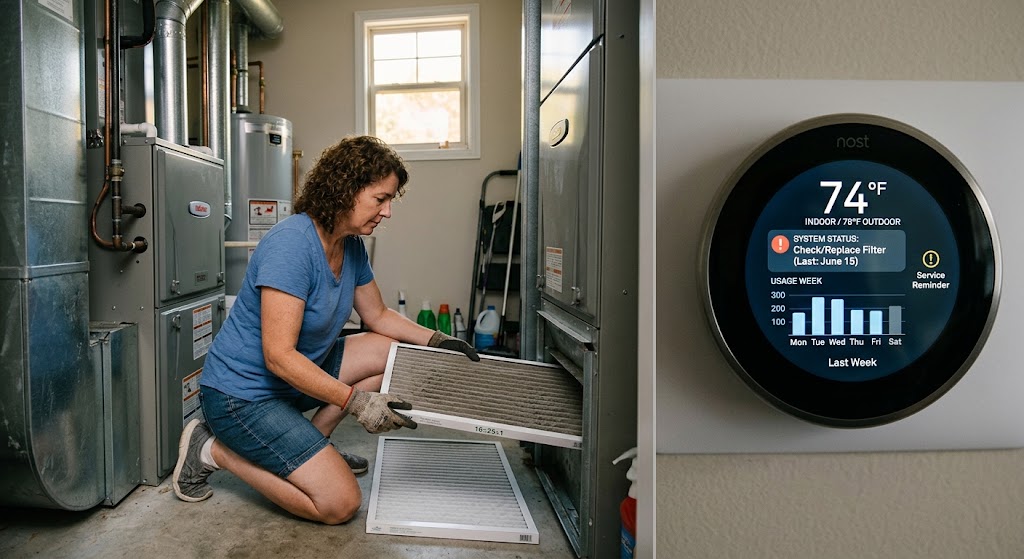
End-of-Summer HVAC Maintenance Checklist for Smart Thermostat Owners
Use your smart thermostat's runtime, filter reminders, temperature sensors, and system alerts to close out cooling season and prepare HVAC equipment for fall.
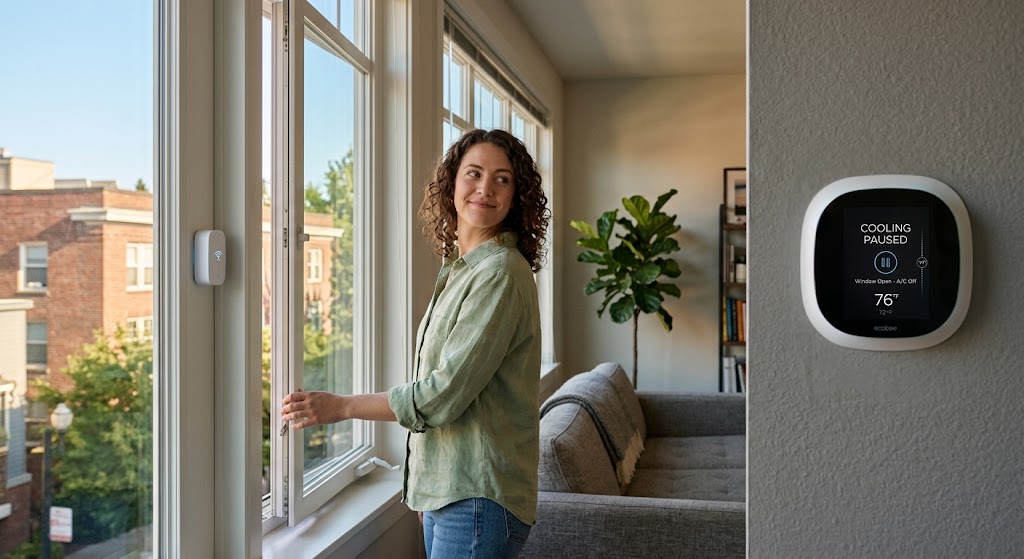
Smart Window Contact Sensors: Preventing Open Window AC Energy Waste
Use window contact sensors to pause cooling only after a window stays open, then restore the previous HVAC state safely after every monitored window is closed.