
Smart Water Shutoff Valves: The Device That Can Lower Home Insurance
Smart water shutoff valves can automatically stop a major plumbing leak before it becomes a catastrophic claim—and some insurers reward that risk reduction with policy discounts.
Quick answer
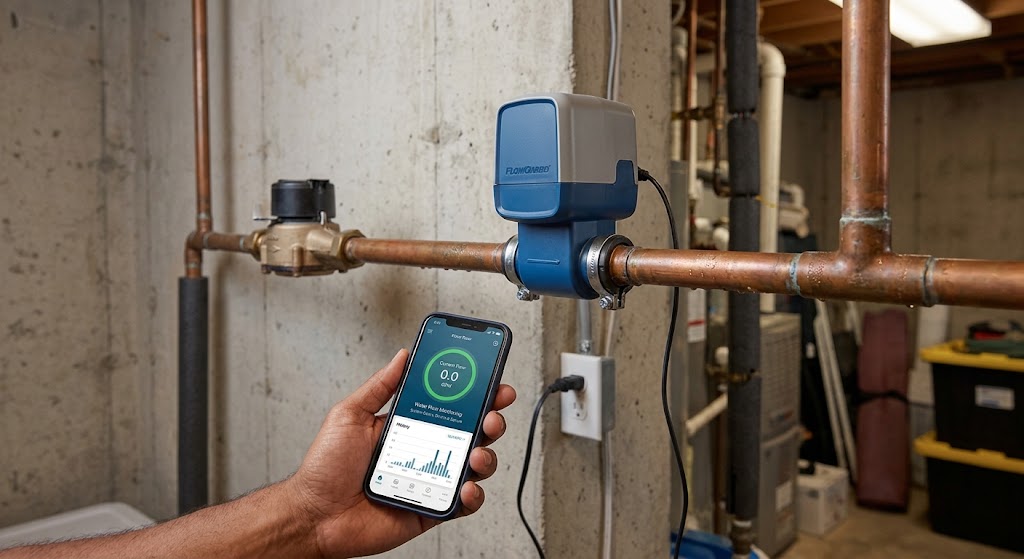
A whole-home smart water shutoff valve can reduce the risk of severe plumbing losses by monitoring flow, pressure, or leak sensors and automatically closing the main water supply when abnormal water use is detected. Some U.S. insurers currently offer policy discounts, device discounts, or smart-home program incentives for qualifying leak-detection systems, but there is no universal insurance discount. Eligibility depends on the insurer, state, policy type, approved device, installation method, monitoring requirements, and whether the system remains activated.
Table of contents
- What Is a Smart Water Shutoff Valve?
- Smart Leak Sensor vs. Smart Shutoff Valve
- Point leak sensor
- Whole-home smart water monitor
- Whole-home monitor + automatic shutoff
- Why Insurers Care
- Does It Really Lower Home Insurance?
- Nationwide
- Chubb
- Phyn’s insurer network
- The Correct Way to Shop: Call Insurance First
- The Insurance Payback Calculation
- Higher-value home example
- What Insurers Are More Likely to Value
- Automatic main-line shutoff
- Whole-home flow monitoring
- Small-leak detection
- Freeze or temperature warnings
- Point sensors
- Manual local control
- Battery backup
- Representative 2026 Products
- Phyn Plus — Strong Insurance Partnership Story
- What makes it interesting for insurance
- Auto Shutoff learning period
- Best for
- Flo by Moen — Strong Mainstream Smart-Home Option
- Best for
- Chubb-Recommended Systems
- What About State Farm?
- Professional Installation Is Usually the Right Choice
- Keep these documents
- Pipe Size Matters
- Wi-Fi Reliability Matters More Than It Seems
- What Happens During a Power Outage?
- What Happens If Wi-Fi Goes Down?
- False Shutoffs Are a Real Usability Problem
- Away Mode Is Especially Valuable
- Add Point Sensors to High-Risk Areas
- Do Smart Shutoffs Cover Flooding?
- Condos and Apartments Are Different
- Insurance Discount vs. Device Discount
- Device discount
- Policy discount
- Smart-home program
- Activation Requirements Can Matter
- The Best Insurance Question to Ask Annually
- Is It Worth It Without an Insurance Discount?
- Who Should Buy One First?
- Strong candidate
- Lower priority
- A Simple Buying Scorecard
- Common Mistakes
- Buying before calling insurance
- Assuming every leak sensor earns a discount
- Forgetting installation cost
- Ignoring valve failure mode
- Turning off Auto Shutoff after one false alert
- Failing to update the insurer after installation
- Losing proof
- Insurance Claim Checklist
- Conclusion
Key takeaways
- Automatic shutoff is more important for loss prevention than a sensor that only sends an alert.
- Insurance discounts are real at some carriers, but they are not universal and can vary by state, policy, device, and activation requirements.
- Ask your insurer which models qualify before buying; an expensive smart valve is not automatically insurance-approved.
- Whole-home flow-based systems are the strongest fit for single-family homes, while point leak sensors are useful supplements around appliances and fixtures.
- Keep installation documentation and verify that the device remains online, activated, and configured for automatic shutoff if the insurer requires ongoing participation.
Editorial transparency
Who worked on this article and how it was handled.
- Written by
- Daniel Reed
- Creation method
- Editorial research
AI assistance: AI assisted with research organization and drafting. Sources, insurance program eligibility, pricing, and the final article should be reviewed by a human editor before publication.
Water damage is one of those homeowner risks that seems minor until it happens.
A supply line under a sink fails while you are at work. A washing-machine hose ruptures upstairs. A pipe freezes while the house is empty. A toilet runs continuously for hours. By the time someone notices, the problem is no longer a plumber visit—it is flooring, drywall, cabinets, furniture, remediation, and an insurance claim.
A smart water shutoff valve attacks that risk in a different way from a normal leak sensor.
A basic sensor tells you:
There is water on the floor.
A whole-home smart shutoff can tell you:
Something abnormal is happening in the plumbing—and I am closing the main water supply now.
That difference is why insurers pay attention.
In 2026, several insurers and risk-management programs actively promote leak detection and automatic shutoff technology. Some provide free or discounted devices. Some offer policy credits. Some require specific approved models or proof that the device is activated.
The crucial point is that the discount is not automatic or universal.
The financial value comes from two separate places:
- reducing the probability that a leak becomes a catastrophic loss;
- potentially qualifying for an insurance incentive.
What Is a Smart Water Shutoff Valve?
A whole-home smart water shutoff is installed on the main domestic water line.
Depending on the product, it can monitor:
- water flow;
- pressure;
- water-use patterns;
- leak events;
- temperature;
- connected moisture sensors.
If the system decides that water behavior is abnormal, it can:
- send an alert;
- give the homeowner time to respond;
- automatically close the home’s main water supply.
The most important feature is number three.
Notifications are useful.
Automatic mitigation is what can prevent thousands of gallons of water from continuing to flow while nobody is home.
Smart Leak Sensor vs. Smart Shutoff Valve
These products are related but not interchangeable.
Point leak sensor
A small battery-powered sensor placed near:
- water heater;
- toilet;
- washing machine;
- dishwasher;
- sink;
- sump pump.
It detects water at that location.
Strengths
- inexpensive;
- easy DIY installation;
- good early warning.
Limitation
- normally cannot stop the water by itself.
Whole-home smart water monitor
Monitors water behavior from the main line.
It may detect:
- microleaks;
- unusual continuous flow;
- fixture behavior;
- pressure anomalies.
Some monitors only alert.
Whole-home monitor + automatic shutoff
Monitors the main line and includes a motorized valve.
This is the strongest insurance-risk-control category because the system can respond to the problem without waiting for a human.
Why Insurers Care
Insurance pricing is fundamentally about expected loss.
A water leak can become expensive because the damage continues until someone discovers it.
Automatic shutoff changes the duration variable.
Instead of:
pipe bursts at 9 a.m. → homeowner arrives at 6 p.m.
the system can potentially become:
pipe bursts at 9 a.m. → valve closes shortly after abnormal flow is detected.
The leak still happened.
The amount of water released can be dramatically different.
That is why companies such as Chubb explicitly describe automatic flow-based leak detection as a loss-prevention measure and recommend it for single-family homes.
Does It Really Lower Home Insurance?
Sometimes.
The most accurate answer in 2026 is:
A qualifying smart water leak system can make you eligible for lower premiums or other insurance incentives, depending on the carrier and state.
Do not treat any national percentage as guaranteed.
Nationwide
Nationwide’s current Smart Home program says participants with qualifying policies may receive:
- free or discounted approved devices;
- smart-home protection services;
- a property-policy discount.
Nationwide also notes that:
- discounts;
- device availability;
- requirements;
vary by state.
Its current program is not available in every state.
Chubb
Chubb currently recommends multiple whole-home water shutoff systems.
Its current guidance says Chubb clients:
- can receive discounts on selected devices;
- may be eligible for an insurance-policy discount.
Chubb advises customers to confirm the exact benefit with their agent, broker, or Risk Solutions Concierge.
Phyn’s insurer network
Phyn currently markets possible insurance savings up to 15%.
That is useful evidence that insurer partnerships exist.
But the fine print matters: Phyn itself states that many—but not all—carriers provide discounts.
So “up to 15%” is not a national insurance benchmark.
It is a manufacturer claim tied to participating insurers.
The Correct Way to Shop: Call Insurance First
Do not buy a $600 or $1,000 smart valve and then ask whether it qualifies.
Reverse the order.
Call your insurance agent and ask:
Do you offer a homeowners premium discount for a whole-home automatic water leak detection and shutoff system?
Then ask:
- Which manufacturers or exact models qualify?
- Is automatic shutoff required?
- Must the system be professionally installed?
- Do point leak sensors count?
- Is 24/7 monitoring required?
- Must the device remain connected to Wi-Fi?
- Do I need proof of activation?
- What documentation must I submit?
- Is the discount percentage fixed or policy-specific?
- Does the discount apply in my state?
Get the requirements in writing if possible.
The Insurance Payback Calculation
Suppose:
- annual homeowners premium = $2,500
- confirmed policy discount = 5%
Annual savings:
$2,500 × 0.05 = $125
Suppose the valve and installation cost:
$900
Simple insurance-only payback:
$900 ÷ $125 = 7.2 years
That is not necessarily a bad result because the system is also protecting the house from a potentially severe loss.
But it shows why a smart water valve should not be purchased only as an insurance-discount arbitrage.
Higher-value home example
Annual premium:
$6,000
Confirmed discount:
7%
Annual savings:
$6,000 × 0.07 = $420
Installed project:
$1,200
Simple payback:
$1,200 ÷ $420 ≈ 2.9 years
Now the insurance economics become more compelling.
But again:
use the discount your insurer confirms, not one you saw in an advertisement.
What Insurers Are More Likely to Value
A device becomes more useful for loss prevention when it can do more than send a phone notification.
Look for these features.
Automatic main-line shutoff
This is the central feature.
If a leak happens while you are:
- asleep;
- flying;
- hiking;
- away from phone service;
the system should still be capable of mitigating the event according to its configured logic.
Whole-home flow monitoring
The system should monitor the domestic water supply, not only one floor location.
Small-leak detection
Slow leaks matter too.
They can create:
- mold;
- cabinet damage;
- flooring damage;
- hidden wall damage;
- higher water bills.
Freeze or temperature warnings
Useful in cold climates where frozen pipes are a serious loss source.
Point sensors
A whole-home monitor can be supplemented with sensors at high-risk areas.
Phyn, for example, currently allows Smart Water Sensors to trigger Phyn Plus Auto Shutoff when configured to do so.
Manual local control
If power, Wi-Fi, or cloud service is unavailable, you should still understand how to operate the water valve.
Battery backup
Especially valuable for homes exposed to:
- storms;
- outages;
- freezing weather.
A water-loss event and power interruption can happen at the same time.
Representative 2026 Products
This is not a universal ranking.
It is a snapshot of notable products and insurer-recognized categories.
Phyn Plus — Strong Insurance Partnership Story
Phyn Plus combines:
- whole-home monitoring;
- pressure-wave analysis;
- leak alerts;
- automatic shutoff;
- water-use data.
Phyn currently lists the second-generation Phyn Plus at $579.99 before installation and any plumbing adapters.
What makes it interesting for insurance
Phyn has direct partnerships with insurance companies.
Nationwide announced a Phyn partnership for eligible high-value homeowners, and Chubb includes Phyn among recommended shutoff options.
Phyn also markets insurance-premium savings of up to 15% through participating carriers.
Again: verify your exact policy.
Auto Shutoff learning period
One important detail is that automatic shutoff is not simply “on from minute one.”
Phyn’s current 2026 documentation says Auto Shutoff becomes available after the device has learned enough household water events or after a defined learning period.
That protects against the system shutting water off before it understands normal behavior.
Best for
- homeowners who want sophisticated whole-home monitoring;
- insurance-conscious buyers;
- users comfortable with professional installation.
Flo by Moen — Strong Mainstream Smart-Home Option
Flo by Moen monitors:
- flow;
- pressure;
- water use.
It can:
- alert the owner;
- automatically shut water;
- provide remote valve control.
Moen’s current online pricing varies by model/pipe size and storefront availability, with some current listings around the high hundreds of dollars.
Because pricing and stock can change, use the model required by your main-line size and confirm current cost before purchasing.
Best for
- homeowners already comfortable with Moen’s ecosystem;
- users wanting flow and pressure monitoring;
- homes where insurer approval is confirmed.
Chubb-Recommended Systems
Chubb currently lists multiple recommended shutoff providers, including products or services from:
- StreamLabs;
- Safehous;
- FloLogic;
- Leak Defense;
- Phyn;
- Moen.
The exact approval path matters.
Chubb explicitly advises customers to confirm whether a device is approved if it is outside the preferred list.
That is an excellent model for every homeowner:
insurance approval first, purchase second.
What About State Farm?
State Farm publishes current educational guidance on automatic water shutoff technology and maintains manufacturer/resources information around whole-home systems.
Its article explains that these systems can:
- detect irregular water flow;
- detect moisture;
- automatically close the home’s supply.
However, do not assume that means your State Farm policy automatically gets a premium discount.
Ask the agent for the current state-specific underwriting rules.
Professional Installation Is Usually the Right Choice
A whole-home shutoff is not the same as placing a sensor under the sink.
Installation can involve:
- shutting the main water supply;
- cutting pipe;
- selecting correct valve size;
- adding fittings;
- installing near an outlet;
- confirming flow direction;
- testing shutoff behavior.
Chubb currently recommends using a licensed plumber experienced with automatic shutoff devices.
That is also useful for insurance documentation.
Keep these documents
- purchase receipt;
- model number;
- serial number;
- installation invoice;
- plumber information;
- installation certificate where provided;
- photo of installed device;
- activation confirmation.
Chubb specifically says customers may provide an installation certificate or photo plus invoice when pursuing the insurance benefit.
Pipe Size Matters
Before ordering, identify the domestic water-main size.
Common residential sizes include:
- 3/4 inch;
- 1 inch;
- larger lines in some homes.
The smart valve must match the plumbing.
Do not estimate from a nearby pipe.
Ask the plumber to verify:
- nominal size;
- fitting type;
- installation location;
- electrical access;
- Wi-Fi signal where needed.
Wi-Fi Reliability Matters More Than It Seems
Many current smart valves use Wi-Fi for:
- app alerts;
- remote control;
- cloud analytics;
- device status.
That means the mechanical valve can be perfectly installed while the smart layer is unreliable.
Before finalizing the installation, test:
- Wi-Fi signal at the main water entry;
- app connectivity;
- alerts;
- firmware updates;
- automatic shutoff logic.
Basements and utility rooms can be poor Wi-Fi environments.
Do not assume the signal is good because your phone works upstairs.
What Happens During a Power Outage?
This varies by product.
Some systems provide:
- battery backup;
- manual valve control;
- local buttons.
Others depend more heavily on AC power.
Ask before buying:
- Can I manually close the valve with no power?
- Does automatic protection continue on battery?
- How long does battery backup last?
- Will the valve stay in its last position?
- Does the app show a power-loss alert?
For a freeze-prone home, power-failure behavior matters.
What Happens If Wi-Fi Goes Down?
A well-designed product should not become a dangerous plumbing obstruction just because the router reboots.
But features may degrade.
Potentially unavailable:
- push notifications;
- remote app control;
- cloud analytics.
Potentially still available, depending on product:
- local leak logic;
- physical valve control;
- battery-backed shutoff.
Read the product’s current failure-mode documentation.
If the insurer requires continuous connectivity, also ask whether prolonged device offline status affects the discount.
False Shutoffs Are a Real Usability Problem
A shutoff system that closes the water every time:
- irrigation runs;
- pool fills;
- whole-home humidifier operates;
- water softener cycles;
will quickly be disabled by the homeowner.
That defeats the entire point.
Good systems need:
- learning period;
- fixture awareness;
- adjustable thresholds;
- away mode;
- user feedback.
Phyn’s current Auto Shutoff documentation specifically accounts for homes with water-using systems such as irrigation, pool fillers, filtration, humidifiers, and water softeners by requiring more learning events before automatic shutoff becomes available.
Away Mode Is Especially Valuable
A home that is occupied has legitimate unusual water events.
A home that is empty should have far less activity.
Phyn’s 2026 Away Mode, for example, increases sensitivity when the homeowner is gone.
This is exactly the type of feature that makes sense for:
- vacation homes;
- frequent travelers;
- seasonal properties.
It changes detection expectations based on occupancy.
Add Point Sensors to High-Risk Areas
Even with a whole-home valve, point sensors are useful.
Place them near:
- water heater;
- washing machine;
- dishwasher;
- refrigerator water line;
- toilets;
- under sinks;
- sump equipment.
Why?
Because a local sensor can detect actual water at the floor level quickly.
When integrated with the shutoff system, it can become another trigger source.
Phyn’s current Smart Water Sensors can be configured to trigger a Phyn Plus shutoff.
That creates defense in depth.
Do Smart Shutoffs Cover Flooding?
No.
This distinction matters for insurance.
A smart water valve controls domestic plumbing water.
It cannot stop:
- storm surge;
- river flooding;
- groundwater intrusion;
- rain through a failed roof;
- sewer backup unless the event involves controllable domestic plumbing flow.
Do not confuse leak mitigation with flood insurance.
They address different perils.
Condos and Apartments Are Different
A single-family homeowner normally controls the main domestic water line.
A condo resident may not.
Buildings can have:
- shared risers;
- shared hot water;
- building-controlled shutoffs;
- inaccessible plumbing.
Chubb’s current guidance distinguishes these situations.
For many condos, point leak sensors are the more realistic solution unless the unit has an individual water supply that can accept an automatic valve.
Building-manager approval may also be required.
Insurance Discount vs. Device Discount
These are different benefits.
Device discount
The insurer or vendor offers:
- preferred pricing;
- installation discount;
- free sensor.
This reduces purchase cost.
Policy discount
The insurer reduces:
- homeowners premium;
- property-policy premium.
This reduces recurring insurance cost.
Smart-home program
The insurer may bundle:
- device;
- monitoring;
- activation requirement;
- policy discount.
Nationwide’s Smart Home program is a current example of this broader model.
Do not assume receiving a free device also means the same percentage premium reduction everywhere.
Activation Requirements Can Matter
Some insurer programs require the device to remain activated.
Nationwide’s current Smart Home FAQ says eligible devices must be activated within the program’s required time window or the policy discount can be removed.
That creates a practical obligation:
If you accept the discount, maintain the device.
Keep:
- batteries fresh;
- Wi-Fi operational;
- app account active;
- sensors installed;
- automatic monitoring enabled as required.
The Best Insurance Question to Ask Annually
At renewal:
Is my automatic water shutoff still receiving the maximum available mitigation credit for my policy?
Programs change.
Underwriting rules change.
Approved devices change.
A system installed three years ago may now qualify for:
- a new credit;
- a different credit;
- no credit;
- upgraded-device requirement.
Treat the insurance benefit like any other recurring discount: verify it periodically.
Is It Worth It Without an Insurance Discount?
Often, yes.
Insurance savings are not the only financial value.
Consider:
- deductible avoided;
- claim avoided;
- flooring saved;
- drywall saved;
- temporary housing avoided;
- furniture protected;
- mold remediation avoided;
- vacation-home risk reduced.
A system can fail to earn a single dollar of premium discount and still prevent a very expensive event.
That is why the purchase decision should be:
loss prevention first
insurance discount second
Who Should Buy One First?
Strong candidate
- high-value home;
- finished basement;
- second home;
- frequent traveler;
- aging plumbing;
- freeze risk;
- water heater in vulnerable location;
- laundry on upper floor;
- expensive hardwood flooring;
- prior water claim.
Lower priority
- very small property;
- easily accessible plumbing;
- owner almost always home;
- low consequence if a minor leak occurs.
Even then, inexpensive point leak sensors can provide useful early warning.
A Simple Buying Scorecard
Score each option from 1–5.
| Criteria | Weight |
|---|---|
| Automatic shutoff reliability | 25% |
| Insurer approval | 20% |
| Leak-detection performance | 15% |
| Power-loss behavior | 10% |
| Wi-Fi/local control reliability | 10% |
| Sensor expansion | 5% |
| Plumber/install support | 5% |
| App usability | 5% |
| Purchase + installation cost | 5% |
Notice that insurer approval ranks above app design.
That is intentional.
If insurance savings are part of the reason you are buying, the approval status has to be known before installation.
Common Mistakes
Buying before calling insurance
This is the biggest one.
Assuming every leak sensor earns a discount
A $40 floor sensor may not qualify the same way as a flow-based automatic main shutoff.
Forgetting installation cost
The device price is not the installed project price.
Ignoring valve failure mode
You need to know what happens during:
- power failure;
- Wi-Fi failure;
- motor fault.
Turning off Auto Shutoff after one false alert
Calibrate the system instead of permanently disabling its core protection feature.
Failing to update the insurer after installation
A device in the basement does not lower the policy if the insurer never knows it exists.
Losing proof
Save installation records digitally.
Insurance Claim Checklist
After installation:
- Ask insurer for approved-device confirmation.
- Photograph device and plumbing connection.
- Save serial number.
- Save plumber invoice.
- Save installation certificate.
- Activate account/app.
- Enable automatic shutoff when learning period permits.
- Add required leak sensors.
- Submit insurer documentation.
- Confirm policy discount appears on declarations/renewal.
- Record discount amount.
- Add annual reminder to re-check eligibility.
Conclusion
A smart water shutoff valve is one of the rare smart-home devices that can potentially pay you back in two different ways.
First, it can prevent a plumbing leak from turning into a major water-damage claim by automatically closing the main supply.
Second, some insurers reward that reduction in risk through:
- premium discounts;
- free or discounted devices;
- smart-home program incentives.
But the insurance benefit is not universal.
Nationwide, Chubb, and other insurers have active water-risk programs, while manufacturers such as Phyn advertise insurer partnerships and potential discounts. The exact savings still depend on the policy, state, device, and program rules.
So the smartest buying process is:
call the insurer → confirm the qualifying model → verify installation requirements → install → activate automatic shutoff → submit proof → confirm the credit.
Do that, and the device becomes more than another connected gadget.
It becomes a piece of home risk-management infrastructure that can stop a loss before the insurance company ever has to pay one.
Common questions
Questions this guide answers
Can a smart water shutoff lower homeowners insurance?
Sometimes. Nationwide currently says eligible Smart Home participants can qualify for a property-policy discount, while Chubb says qualifying clients may be eligible for an insurance-policy discount after installing an approved water leak detection and automatic shutoff system. Other carriers may offer device discounts, preferred pricing, or no premium credit at all.
How much insurance discount can I get?
There is no standard national percentage. Discount amounts vary by insurer, state, policy, and device. Phyn currently markets potential premium savings of up to 15% with participating carriers, but that is a vendor claim and does not mean every insurer will offer that amount. Ask your insurance agent for the exact credit before buying.
What type of water shutoff device do insurers prefer?
Insurers commonly favor whole-home flow-based systems installed on the main water line that can detect abnormal water use and automatically close the supply. Chubb specifically recommends flow-based automatic shutoff systems for single-family homes, while point leak sensors are more commonly used as supplements or in condos where main-line access may be limited.
Do smart water shutoff valves need professional installation?
Most whole-home in-line shutoff products require cutting into the domestic water main and should normally be installed by a licensed plumber. Insurers may also ask for an installation invoice, certificate, device photo, proof of activation, or monitoring status before applying a policy discount.
Evidence & further reading
Sources & references
Primary and authoritative references used to support or contextualize this article. Links open the original source.
- 1Protect Your Home and Family with Smart Home
Nationwide · Accessed Aug 10, 2026
Supports current Nationwide smart-home water leak programs, free or discounted approved devices, possible policy discounts, activation requirements, and state availability limitations.
- 2Nationwide Smart Home Program: Information for Agents
Nationwide · Accessed Aug 10, 2026
Supports that Smart Home members may be eligible for a policy discount and that discounts, device availability, and requirements vary by state.
- 3Water Coverage
Chubb · Accessed Aug 10, 2026
Supports Chubb's current recommended water shutoff systems, possible device and insurance-policy discounts, professional-installation guidance, and automatic-shutoff risk mitigation.
- 4The smartest way to prevent water damage – and 7 tips to get you started
Chubb · Accessed Aug 10, 2026
Supports flow-based automatic shutoff as Chubb's preferred home approach, professional installation, and documentation such as an installation certificate or invoice for possible insurance discounts.
- 5Whole house water leak detection systems with automatic shut-off
State Farm · Accessed Aug 10, 2026
Supports how automatic water shutoff valves detect abnormal flow or moisture and stop the home's water supply to reduce potential damage.
- 6Phyn Plus Smart Water Assistant + Shutoff (2nd Gen)
Phyn · Accessed Aug 10, 2026
Supports current Phyn Plus pricing, whole-home pressure-wave monitoring, professional plumbing considerations, and automatic water shutoff.
- 7What is Auto Shutoff and how does it work?
Phyn · Accessed Aug 10, 2026
Supports Phyn Plus Auto Shutoff behavior, learning period, and current 2026 activation rules.
- 8Phyn
Phyn · Accessed Aug 10, 2026
Supports Phyn's current marketing claim of potential insurance premium savings up to 15% with participating carriers, while noting not all carriers provide discounts.
- 9Flo Smart Water Monitor & Shutoff
Moen · Accessed Aug 10, 2026
Supports current Flo by Moen automatic shutoff, flow/pressure monitoring, real-time notifications, remote control, and current listed pricing.

About the author
Daniel Reed
Daniel writes about connected-home standards, small-space technology, device interoperability, and privacy-conscious urban living.
More from Daniel →Make your home smarter without buying every gadget.
One useful idea, one product worth knowing, and one energy-saving action—delivered weekly.
No spam. Unsubscribe anytime.
Semantic recommendations
Related reading
Selected from topic cluster, entities, tags, search intent, and editorial relationships.

Best Outdoor Smart Plugs for Patio String Lights and Lanterns
Choose the right outdoor smart plug for patio lighting by comparing weather resistance, Matter support, dimming, schedules, outlet control, and safety.
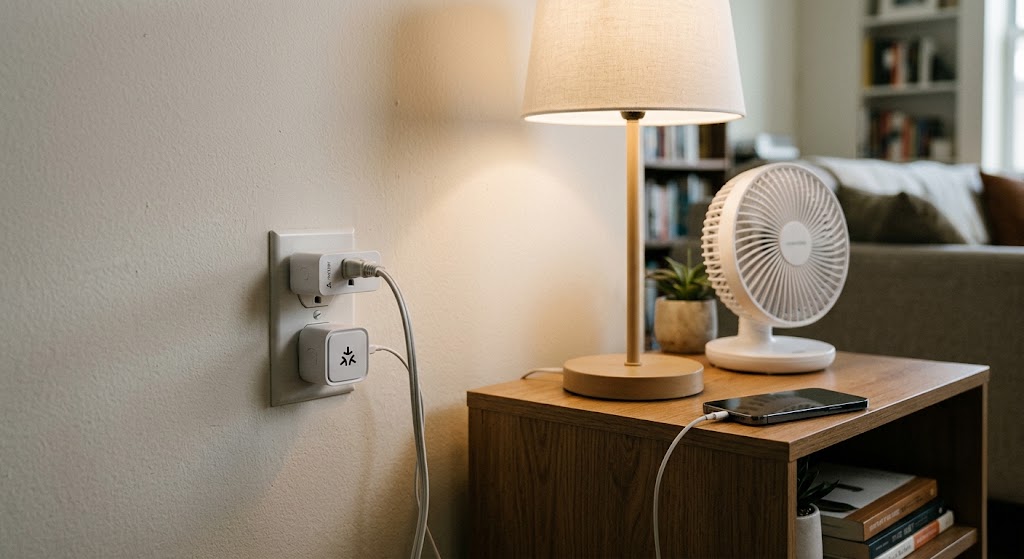
Matter-Compatible Smart Plugs: The 2026 Renter Buying Guide
A renter-focused guide to choosing Matter smart plugs in 2026, including Wi-Fi vs Thread, energy monitoring, load limits, and the best current options.
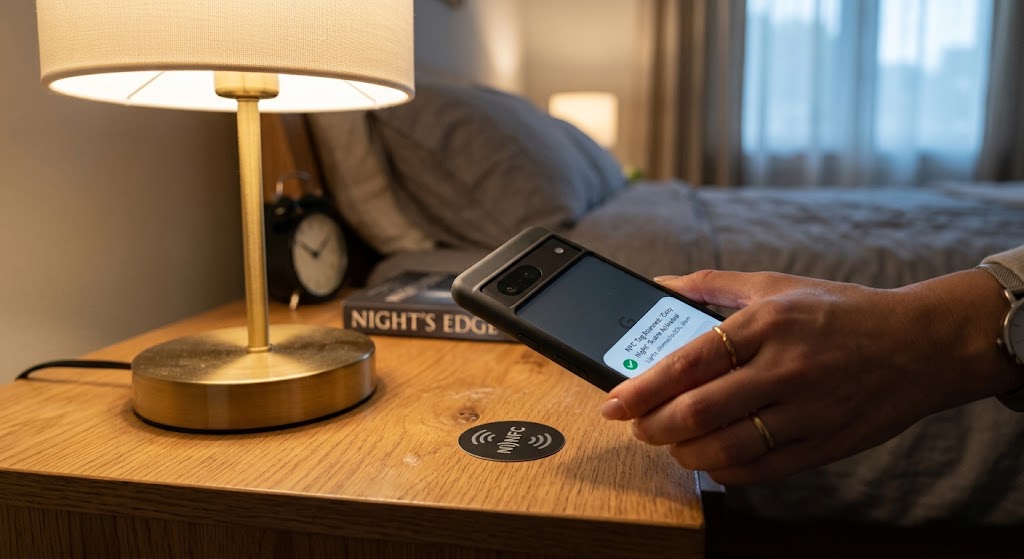
How to Set Up NFC Tags Around the House for One-Touch Lighting
Use inexpensive NFC tags as intentional one-touch lighting controls for bedside scenes, entryways, desks, and whole-home off routines without adding wall switches.
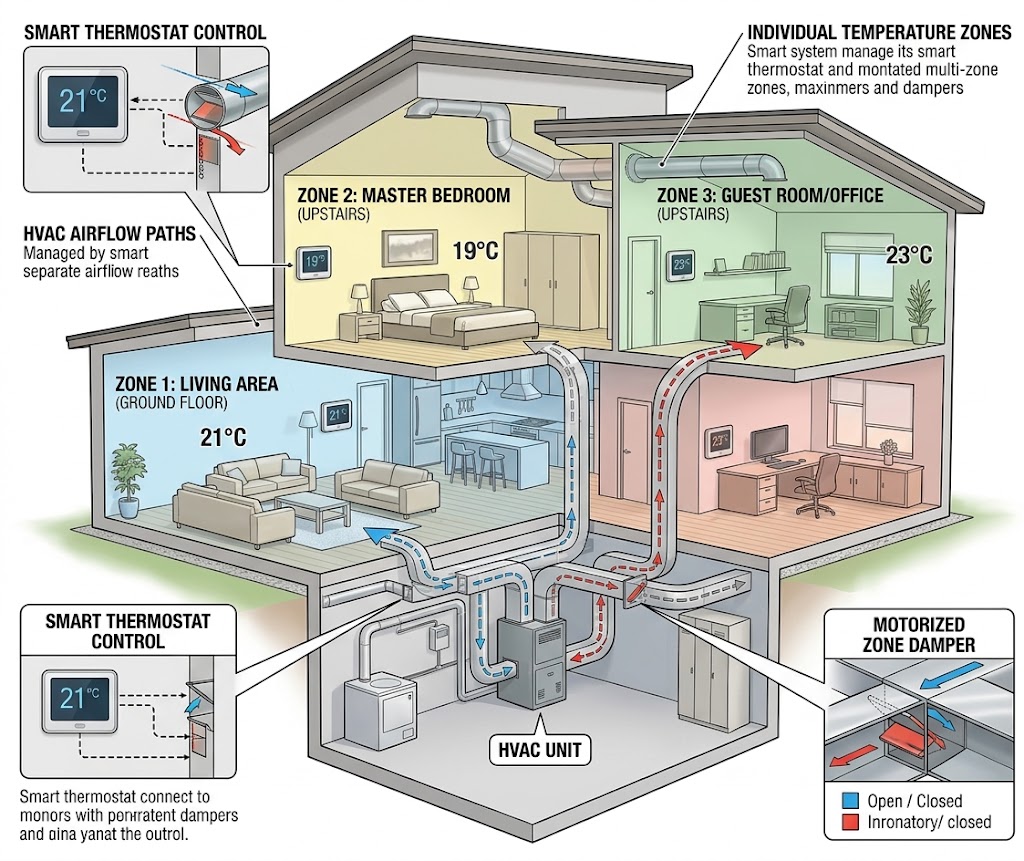
How Smart Thermostats Handle Multi-Zone HVAC Systems Efficiently
Multi-zone HVAC works best when thermostats, zone controls, sensors, and equipment capacity cooperate instead of fighting each other.