
Energy Star Smart Thermostats: How to Claim Your Local Utility Rebate
Local utilities often discount ENERGY STAR smart thermostats at checkout or reimburse eligible purchases. Here is how to find, verify, and claim the right 2026 offer.
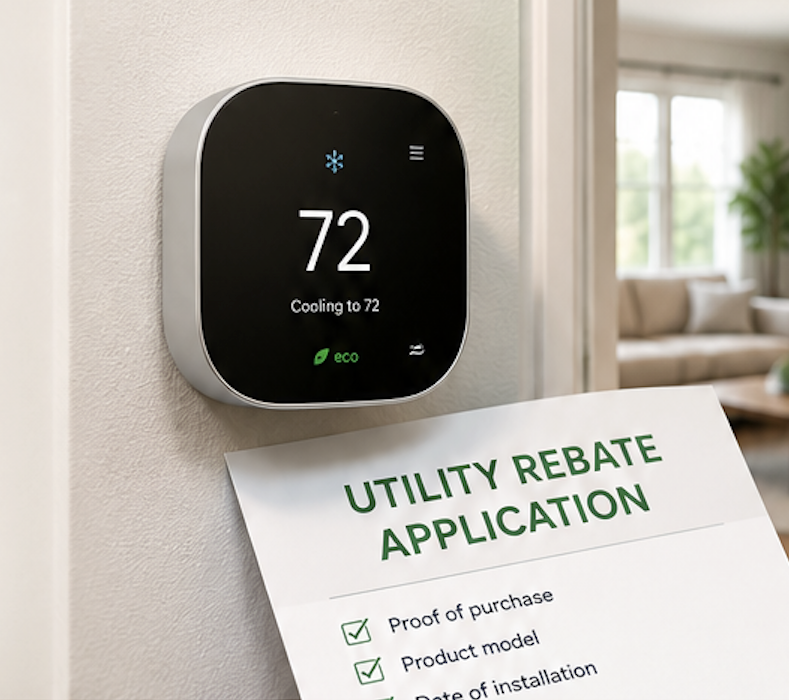
Quick answer
To claim a local utility rebate for an ENERGY STAR smart thermostat in 2026, first identify your electric or gas utility and search the ENERGY STAR Rebate Finder by ZIP code. Verify the exact eligible thermostat models, customer and HVAC requirements, purchase dates, installation rules, and whether the incentive is an instant discount, reimbursement, or demand-response reward before you buy. Keep the receipt, model information, installation details, and utility account information required by the specific program.
Table of contents
- Start With the ENERGY STAR Rebate Finder
- Why ZIP Code Alone Is Not Enough
- Understand the Four Common Incentive Types
- 1. Instant marketplace discount
- 2. Post-purchase rebate
- 3. Installer or contractor incentive
- 4. Demand-response reward
- Step 1: Confirm That You Are an Eligible Utility Customer
- Step 2: Confirm That the Exact Model Qualifies
- Why this matters for demand response
- Step 3: Check the Purchase Window
- Step 4: Compare the Utility Marketplace With Retail Pricing
- Step 5: Verify HVAC Compatibility Before Buying
- Step 6: Read the Installation Rules
- Step 7: Save Every Piece of Documentation
- Photograph the serial label before installation
- Step 8: Submit the Rebate Through the Correct Channel
- Step 9: Complete Demand-Response Enrollment Separately
- Read the event rules before enrolling
- Step 10: Track the Claim Until Payment Arrives
- A 2026 Example: Why Program Structure Matters
- What If the Utility Rebate Is Larger Than the Thermostat Price?
- Utility Rebate vs. Federal Tax Credit in 2026
- Common Reasons Smart Thermostat Rebates Get Rejected
- Wrong model
- Wrong utility
- Purchase outside the eligible dates
- Missing receipt details
- Account information does not match
- Wrong installation method
- Duplicate incentive
- Demand-response enrollment never completed
- Should You Choose a Thermostat Based on the Rebate?
- Final Rebate Checklist
- Conclusion
Key takeaways
- Search by ZIP code first because smart thermostat rebate amounts, eligible utilities, and program rules vary by location.
- Do not buy from a retailer until you know whether your utility requires a specific model, marketplace, purchase date, HVAC system, or program enrollment.
- A rebate may be an instant checkout discount, post-purchase reimbursement, digital reward, or incentive tied to demand-response participation.
- Save your receipt, thermostat model information, service address, installation details, and confirmation emails until the incentive is fully paid.
- Utility rebates are separate from federal tax credits; current IRS guidance says Section 25C does not apply to property placed in service after December 31, 2025.
Editorial transparency
Who worked on this article and how it was handled.
- Written by
- Maya Chen
- Creation method
- Editorial research
AI assistance: AI assisted with research organization and drafting. Sources, factual claims, and the final article should be reviewed by a human editor before publication.
Buying an ENERGY STAR smart thermostat at full retail price can be unnecessary. Across the United States, electric and gas utilities continue to offer smart-thermostat incentives in 2026, but there is no single national rebate amount or one universal application process.
The confusing part is that the word rebate can mean several different things. One utility may discount the thermostat instantly in its online marketplace. Another may reimburse you after purchase. A third may offer an additional reward only if you enroll the thermostat in a demand-response program that can temporarily adjust your setpoint during periods of high grid demand.
That means the best time to research the rebate is before you choose the thermostat or retailer. This guide shows how to find your local offer, verify the fine print, document the purchase correctly, and avoid the mistakes that cause otherwise eligible claims to be rejected.
Start With the ENERGY STAR Rebate Finder
The fastest national starting point is ENERGY STAR’s rebate search.
ENERGY STAR currently maintains a large database of smart-thermostat incentives submitted by participating utilities and program partners. The offers include different values, application methods, effective dates, service areas, and customer requirements.
The process is simple:
- open the ENERGY STAR Rebate Finder;
- enter the ZIP code for the home where the thermostat will be installed;
- filter for Heating & Cooling and Smart Thermostats;
- identify the utility or program that actually serves your address;
- open the program’s own website before buying anything.
The last step is essential.
The ENERGY STAR database is an excellent discovery tool, but your utility’s current terms and conditions should be treated as the final source for eligibility, deadlines, approved models, and application instructions.
Why ZIP Code Alone Is Not Enough
Two homes in the same city can sometimes have different incentive options because they have different energy providers.
Your household might have:
- one company for electricity;
- another utility for natural gas;
- a municipal or cooperative electric provider;
- or a competitive energy supplier that is different from the company operating the local grid.
A smart thermostat may qualify through the electric utility, gas utility, both, or neither.
Check a recent utility bill and identify the actual utility account associated with the home’s heating and cooling equipment.
For example, if your furnace uses natural gas but your central air conditioner uses electricity, there may be different programs depending on which utility is trying to reduce energy use or peak demand.
Understand the Four Common Incentive Types
The phrase “smart thermostat rebate” hides several different program structures.
1. Instant marketplace discount
This is usually the easiest option.
The utility operates or partners with an online marketplace. After you verify that you are an eligible customer, the rebate is deducted before checkout.
Advantages:
- no waiting for reimbursement;
- less paperwork;
- eligible models are usually pre-filtered;
- lower upfront cost.
The trade-off is that the full discount may only be available through that marketplace.
2. Post-purchase rebate
You buy the thermostat from an approved or permitted retailer, install it, then submit documentation.
The program may ask for:
- purchase receipt;
- purchase date;
- manufacturer and model;
- serial number;
- service address;
- utility account information;
- installation date;
- proof of installation.
Payment may arrive as a check, bill credit, prepaid card, digital gift card, or another program-specific method.
3. Installer or contractor incentive
Some programs route the incentive through participating HVAC contractors or distributors.
In that case, the discount may already appear on your contractor’s invoice rather than being paid directly to you later.
Ask the contractor:
- whether the rebate has already been deducted;
- who submits the application;
- what happens if the claim is rejected;
- whether you need to sign an assignment or participation form.
4. Demand-response reward
This is different from a simple product rebate.
A utility may pay you to enroll an eligible smart thermostat in a program that reduces or shifts electricity demand during a limited number of high-demand events.
During an event, the utility or thermostat platform may temporarily adjust the setpoint. Programs typically disclose event duration, maximum temperature adjustment, opt-out rights, and participation requirements.
AEP Ohio provides a clear current example: eligible customers can receive different incentives depending on whether they purchase through the utility marketplace, buy an eligible thermostat elsewhere, or enroll an existing compatible thermostat in its Power Rewards program.
The important lesson is not the dollar amount from one utility. It is the structure: the biggest total incentive may require both a qualifying purchase and program enrollment.
Step 1: Confirm That You Are an Eligible Utility Customer
Before comparing thermostat features, verify the customer requirements.
Programs commonly restrict eligibility by:
- residential rate class;
- active utility account;
- service address;
- owner-occupied or rented property rules;
- single-family or multifamily building type;
- electric versus gas customer status;
- HVAC equipment type;
- previous rebate participation.
The person applying may also need to match the primary utility account holder.
Do not assume that owning a qualifying thermostat is enough.
A current AEP Ohio program, for example, requires eligible customers to be on a residential rate and have a compatible Wi-Fi thermostat controlling qualifying central air conditioning and/or electric heating equipment.
Another utility may use completely different criteria.
Step 2: Confirm That the Exact Model Qualifies
ENERGY STAR certification is often the starting requirement, not the whole requirement.
A utility may maintain a narrower approved-product list based on:
- manufacturer;
- exact thermostat model;
- software platform;
- Wi-Fi capability;
- demand-response compatibility;
- HVAC system support.
Do not rely on a product listing that merely says “ENERGY STAR” in the description.
Record the exact:
- manufacturer;
- model number;
- product SKU if relevant;
- certification status.
Then compare it with the utility program’s current eligible-products list.
Why this matters for demand response
A thermostat can be perfectly capable of controlling your HVAC system but still be ineligible for a utility’s grid program because the utility only integrates with certain manufacturers or cloud platforms.
That is a different compatibility question from HVAC wiring.
You need both:
- HVAC compatibility, and
- program compatibility.
Step 3: Check the Purchase Window
Rebate programs have dates.
Look for:
- program start date;
- program end date;
- eligible purchase date;
- eligible installation date;
- application deadline.
Some ENERGY STAR Rebate Finder listings show programs that run through a specified calendar year, while others are listed as ongoing.
Do not assume a thermostat bought last year qualifies for this year’s offer.
A common rejection scenario is:
The equipment is eligible, but the purchase date falls outside the program period.
If you already purchased the thermostat, check this requirement before spending time completing the rest of the application.
Step 4: Compare the Utility Marketplace With Retail Pricing
An instant utility rebate is convenient, but you should still compare the final price.
ENERGY STAR says smart thermostats can range roughly from $50 to $300, depending on features and model.
Compare:
- utility marketplace price after discount;
- manufacturer direct price;
- major retailer price;
- installation package price;
- any additional demand-response enrollment reward.
The cheapest sticker price is not always the cheapest final route.
For example, a utility marketplace might offer a larger instant discount if you agree to enroll in a demand-response program, while buying from another retailer may qualify for a smaller post-purchase rebate.
Calculate the net cost after all requirements, not just the advertised thermostat price.
Step 5: Verify HVAC Compatibility Before Buying
A rebate is useless if the thermostat cannot control your system.
ENERGY STAR recommends checking thermostat compatibility with your heating and cooling equipment before purchasing.
Common questions include:
- conventional furnace or heat pump?
- single-stage or multi-stage equipment?
- central AC?
- auxiliary or emergency heat?
- C-wire availability?
- proprietary communicating HVAC system?
- boiler or hydronic heating?
- line-voltage electric heating?
A conventional ENERGY STAR smart thermostat designed for 24V central HVAC is generally not a direct replacement for a 120V or 240V electric baseboard thermostat.
If the HVAC system is unusual, use the manufacturer’s compatibility checker or ask a qualified HVAC professional.
Step 6: Read the Installation Rules
Some utility programs allow self-installation.
Others may require:
- professional installation;
- installation by a participating contractor;
- proof that the thermostat is connected and operational;
- enrollment in the manufacturer’s app;
- demand-response activation.
Read this before paying an installer.
If the program requires a participating contractor, using a contractor outside the network can invalidate the rebate even if the thermostat itself is eligible.
Step 7: Save Every Piece of Documentation
Create a small rebate folder before installation.
Keep:
- itemized purchase receipt;
- order confirmation;
- invoice;
- thermostat model number;
- serial number;
- product box label;
- ENERGY STAR product information if requested;
- installation invoice;
- installation date;
- photos if required;
- utility account number;
- confirmation emails.
If the utility marketplace applies an instant discount, keep that invoice too. You may need it later to prove participation, warranty status, or enrollment.
Photograph the serial label before installation
This takes seconds and can save a lot of frustration.
Once the thermostat is mounted, a serial number or model label may be harder to access.
Step 8: Submit the Rebate Through the Correct Channel
The ENERGY STAR database shows that current programs use several fulfillment methods, including:
- utility online marketplace;
- online rebate application;
- mail-in rebate;
- participating contractors or distributors.
Follow the specific program, not a generic rebate checklist from a blog.
When completing the form:
- use the utility account holder’s information;
- match the service address exactly;
- enter the exact model;
- upload a legible full receipt;
- confirm the purchase date;
- submit before the deadline.
Save a screenshot or PDF of the completed submission if the portal allows it.
Step 9: Complete Demand-Response Enrollment Separately
This is where homeowners often leave money on the table.
The product rebate and the demand-response program can be two separate steps.
AEP Ohio’s current program illustrates the distinction. Customers can receive instant savings when purchasing through its smart thermostat marketplace, while enrollment in Power Rewards can provide additional rewards for participating in peak-demand events.
Do not assume buying the thermostat automatically enrolls it.
Look for terms such as:
- demand response;
- peak-time events;
- smart thermostat rewards;
- connected savings;
- bring-your-own-thermostat;
- virtual power plant;
- demand flexibility.
Read the event rules before enrolling
Check:
- number of potential events;
- maximum event duration;
- temperature adjustment;
- whether you can opt out;
- minimum annual participation;
- recurring reward requirements.
This is not necessarily a reason to avoid the program. It is simply part of the value exchange.
Step 10: Track the Claim Until Payment Arrives
A submitted application is not the same as an approved rebate.
Record:
- submission date;
- application or confirmation number;
- expected payment method;
- program contact information.
Watch your email for requests for missing documentation.
If the application portal shows a status page, keep the link or login details.
Do not discard the packaging or original purchase documentation until the claim is fully resolved.
A 2026 Example: Why Program Structure Matters
AEP Ohio shows how one smart thermostat can interact with several incentive layers.
Its current Power Rewards information says an eligible customer who needs a thermostat can buy through the utility’s marketplace and receive an instant $75 discount when enrolling in the program.
The utility also describes a different path for eligible thermostats purchased elsewhere: a current-year qualifying purchase can receive a $25 digital gift card, while successful enrollment can earn an additional $50 reward. Customers meeting the stated annual participation threshold can also receive a recurring reward.
This example should not be treated as a national rebate schedule.
It demonstrates why you should ask four separate questions:
- Is there a product-purchase incentive?
- Is the amount different depending on where I buy?
- Is there another reward for connecting the thermostat?
- Is there an ongoing reward for participating in grid events?
A quick rebate search that only answers the first question can miss much of the available value.
What If the Utility Rebate Is Larger Than the Thermostat Price?
This can happen when program incentives are bundled with enrollment or when utility marketplaces run limited promotions.
Do not assume you will receive cash equal to the advertised rebate if the thermostat price is lower.
Programs can cap the incentive at:
- purchase price;
- eligible equipment cost;
- one device per household;
- one rebate per account.
Promotional pricing can also change during the year.
Always read the current terms.
Utility Rebate vs. Federal Tax Credit in 2026
Do not confuse a local utility smart thermostat rebate with the old federal home-efficiency tax-credit framework.
Current IRS guidance says the Section 25C Energy Efficient Home Improvement Credit is not allowed for property placed in service after December 31, 2025.
So for a thermostat purchased and installed in 2026, do not assume an old article describing a federal Section 25C benefit still applies.
Local utility discounts, state programs, demand-response rewards, and other programs can continue independently.
That makes current ZIP-code research even more important.
Common Reasons Smart Thermostat Rebates Get Rejected
Wrong model
The thermostat is smart, but it is not on the program’s eligible list.
Wrong utility
The homeowner found a rebate for a nearby provider that does not serve the property.
Purchase outside the eligible dates
The thermostat was bought before the current program period.
Missing receipt details
The uploaded receipt does not clearly show model, retailer, purchase date, or price.
Account information does not match
The applicant name or service address differs from the utility account.
Wrong installation method
The program required a participating contractor but the thermostat was self-installed or installed by an ineligible contractor.
Duplicate incentive
The account already used the allowed thermostat rebate.
Demand-response enrollment never completed
The customer received or expected an enrollment reward but never linked the thermostat account or completed the participation process.
Should You Choose a Thermostat Based on the Rebate?
The rebate should influence the decision, but it should not make the decision by itself.
Start with:
- HVAC compatibility;
- reliability;
- usability;
- privacy and account requirements;
- room-sensor needs;
- ecosystem compatibility;
- utility-program compatibility.
Then compare net cost.
A $50 thermostat that does not work properly with your HVAC system is not a bargain. A more expensive model can be the better value if it controls the equipment correctly and provides features you will actually use.
ENERGY STAR-certified smart thermostats also have a meaningful efficiency distinction: ENERGY STAR requires certified products to demonstrate savings based on real-world field data. ENERGY STAR’s current FAQ says average savings are approximately 8% of heating and cooling bills, although actual savings depend on climate, equipment, occupancy, and comfort preferences.
Final Rebate Checklist
Before clicking Buy, confirm all of these:
- I identified the actual electric and/or gas utility serving the property.
- I entered the installation ZIP code in the ENERGY STAR Rebate Finder.
- I opened the current utility program page.
- My residential account qualifies.
- The exact thermostat model qualifies.
- The thermostat is compatible with my HVAC system.
- The purchase date will fall inside the program period.
- I know whether purchase through the utility marketplace changes the rebate amount.
- I know whether professional installation is required.
- I know which documents must be submitted.
- I checked whether demand-response enrollment adds another reward.
- I know the claim deadline.
- I will keep the receipt and confirmation until payment is complete.
If every box is checked, you are much less likely to lose an otherwise valid incentive.
Conclusion
Claiming a local smart thermostat rebate in 2026 is mostly a matter of doing the steps in the right order.
Start with your ZIP code and utility, not with the thermostat. Use the ENERGY STAR Rebate Finder to discover current offers, then verify the exact rules on the utility’s own program page. Confirm the model, HVAC compatibility, purchase window, installation requirements, and whether the best incentive requires marketplace purchase or demand-response enrollment.
Only then buy the thermostat.
That extra five or ten minutes of research can be the difference between an instant discount or successful rebate—and discovering after installation that the model, retailer, date, or account was never eligible.
Common questions
Questions this guide answers
How do I find smart thermostat rebates near me?
Start with the ENERGY STAR Rebate Finder and enter your ZIP code, then check your electric and gas utility websites directly. Some utilities offer instant marketplace discounts, while others require an online or mail-in application after purchase.
Does an ENERGY STAR thermostat automatically qualify for a rebate?
No. ENERGY STAR certification may be required, but the utility can impose additional restrictions such as specific model lists, residential rate classes, HVAC types, purchase dates, service addresses, installation rules, or enrollment in a demand-response program.
Can I get the rebate if I already bought the thermostat?
Sometimes. Some programs reimburse an eligible thermostat bought from another retailer if it was purchased during the program period and installed at the eligible service address. Other programs require purchase through the utility marketplace to receive the full instant discount, so check the rules before buying.
Are 2026 smart thermostat utility rebates the same as a federal tax credit?
No. Utility rebates and rewards are separate local or regional programs. The federal Section 25C Energy Efficient Home Improvement Credit is not allowed for property placed in service after December 31, 2025, according to current IRS guidance.
Evidence & further reading
Sources & references
Primary and authoritative references used to support or contextualize this article. Links open the original source.
- 1Smart Thermostats
ENERGY STAR · Accessed Aug 10, 2026
Supports ENERGY STAR guidance to use Product Finder and ZIP-code information to identify products, prices, discounts, and utility rebates.
- 2Special Offers and Rebates from ENERGY STAR Partners
ENERGY STAR · Accessed Aug 10, 2026
Supports the use of ENERGY STAR's ZIP-code rebate search and shows that smart thermostat incentives vary by utility, amount, method, and program dates.
- 3Power Rewards
AEP Ohio · Accessed Aug 10, 2026
Provides a current 2026 example of instant marketplace savings, post-purchase rewards, model eligibility, and demand-response participation requirements.
- 4ENERGY STAR Smart Thermostats FAQs for EEPS
ENERGY STAR · Accessed Aug 10, 2026
Supports ENERGY STAR smart thermostat energy-savings criteria and the distinction between certified products and other connected thermostats.
- 5FAQs for modification of sections 25C, 25D, 25E, 30C, 30D, 45L, 45W, AND 179D under Public Law 119-21
Internal Revenue Service · Accessed Aug 10, 2026
Supports the termination of the Section 25C Energy Efficient Home Improvement Credit for property placed in service after December 31, 2025.

About the author
Maya Chen
Maya covers residential energy, HVAC controls, and practical home automation, translating technical systems into useful decisions for homeowners and renters.
More from Maya →Make your home smarter without buying every gadget.
One useful idea, one product worth knowing, and one energy-saving action—delivered weekly.
No spam. Unsubscribe anytime.
Semantic recommendations
Related reading
Selected from topic cluster, entities, tags, search intent, and editorial relationships.
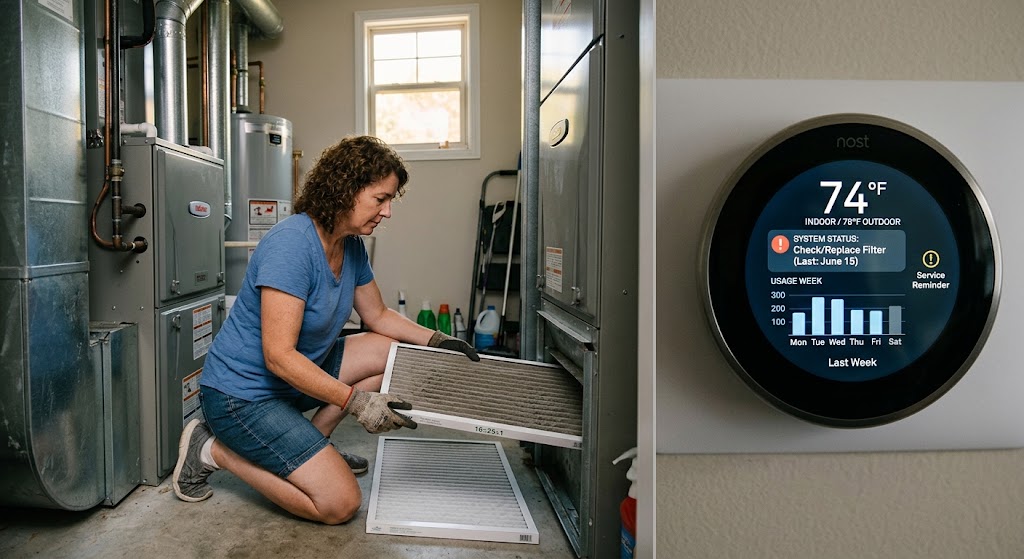
End-of-Summer HVAC Maintenance Checklist for Smart Thermostat Owners
Use your smart thermostat's runtime, filter reminders, temperature sensors, and system alerts to close out cooling season and prepare HVAC equipment for fall.
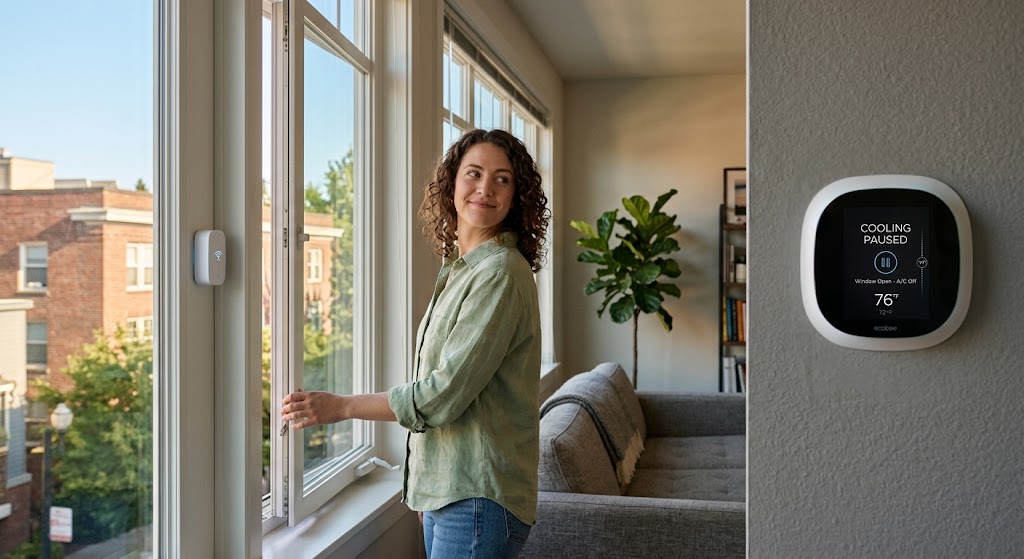
Smart Window Contact Sensors: Preventing Open Window AC Energy Waste
Use window contact sensors to pause cooling only after a window stays open, then restore the previous HVAC state safely after every monitored window is closed.
How to Optimize Your Smart AC for Late-Summer Heatwaves
Use smarter cooling schedules, sensible setpoints, humidity control, room sensors, and maintenance checks to stay comfortable during late-summer heatwaves without wasting energy.

5 Smart Thermostat Placement Mistakes That Can Waste Hundreds on HVAC Bills
Wrong thermostat placement can distort temperature readings, increase HVAC runtime, and quietly undermine both comfort and energy savings.